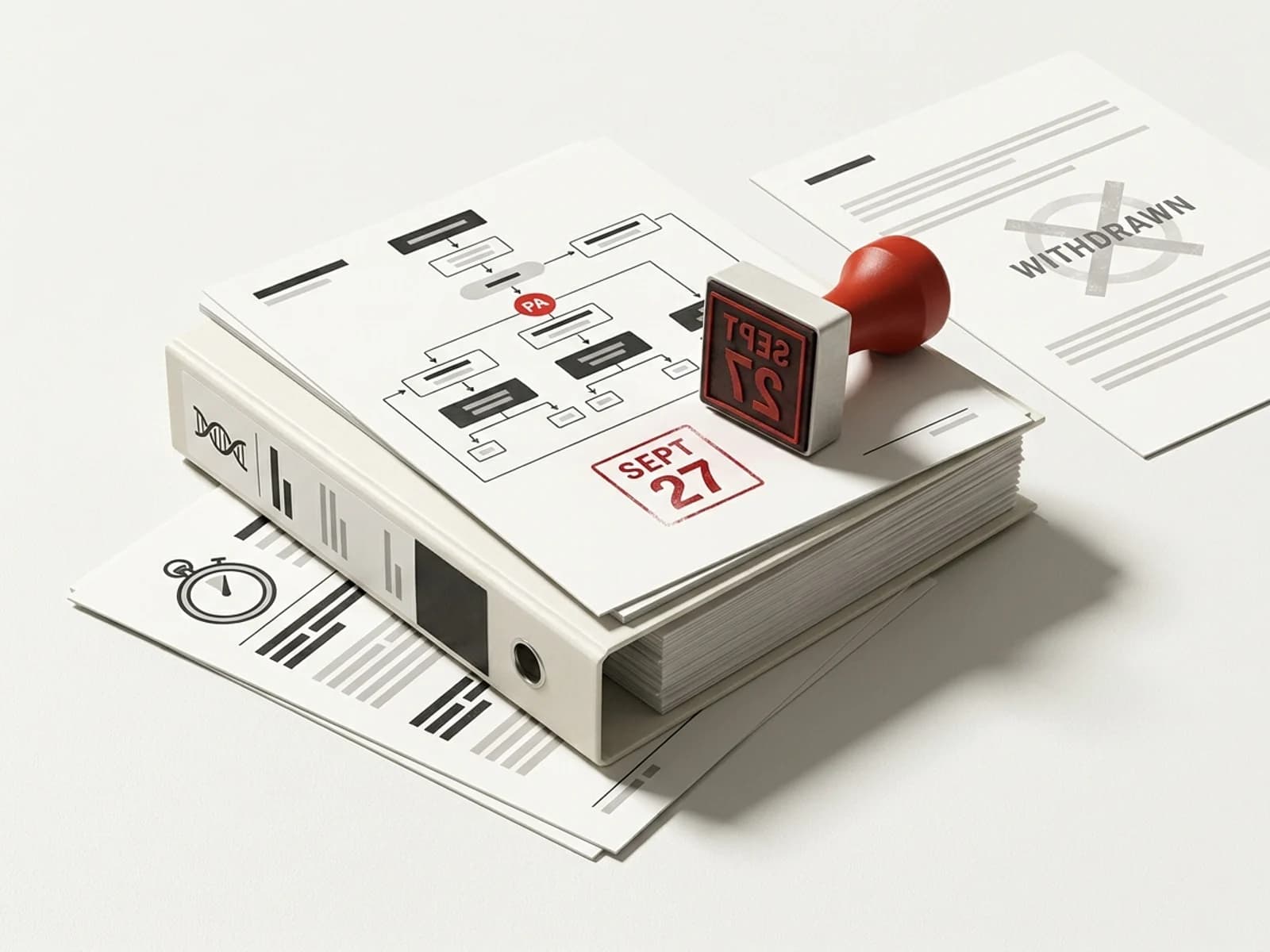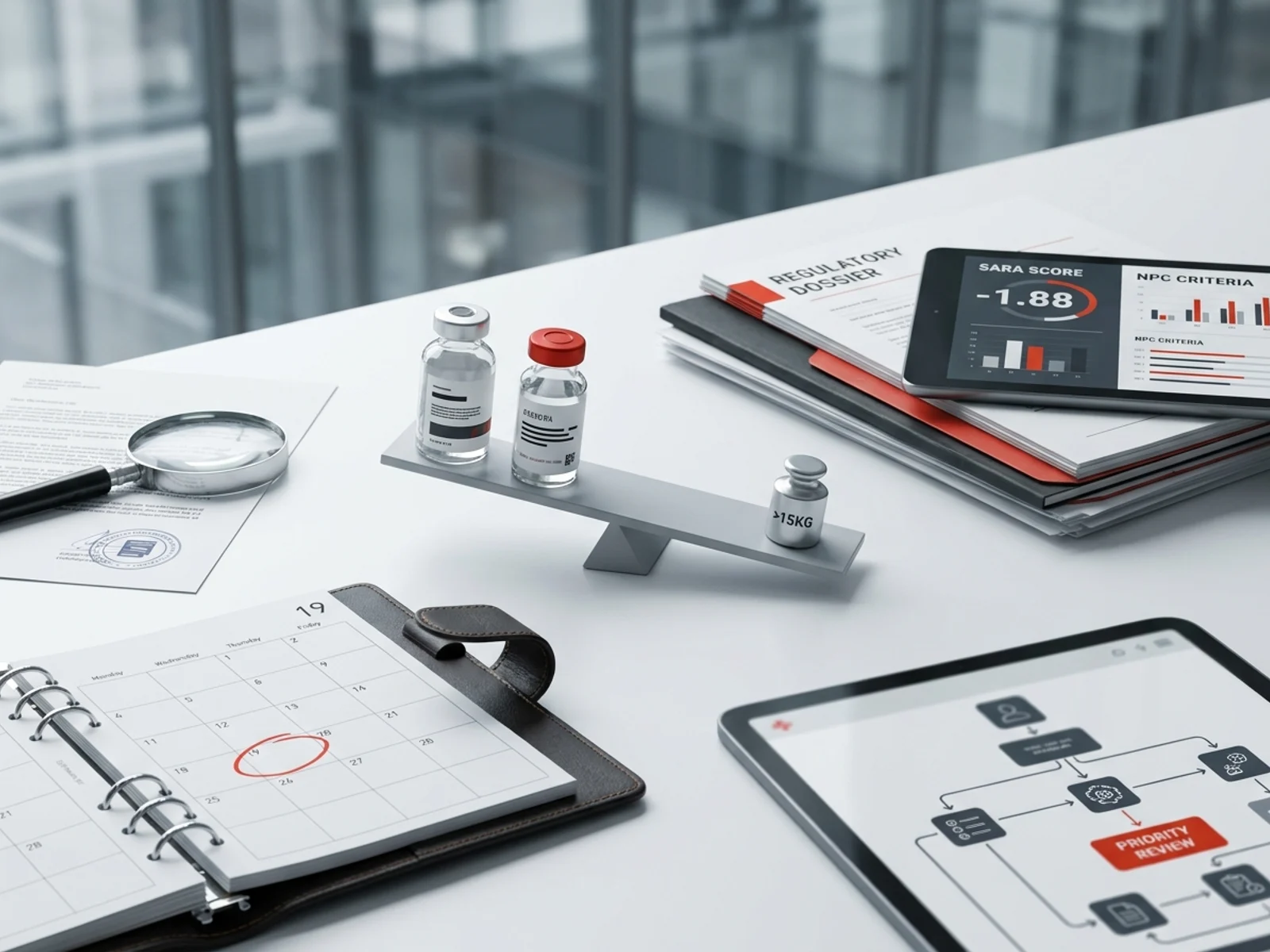
On June 17, 2025, FDA Commissioner Marty Makary, M.D., M.P.H., announced the Commissioner's National Priority Voucher (CNPV) pilot program, a new expedited review pathway that collapses standard 10-to-12-month review timelines to as little as one to two months. In its first year the program has awarded roughly two dozen vouchers, produced seven approvals spanning gene therapy, oncology, anesthesia, and domestic manufacturing, and issued at least one complete response letter. A June 4, 2026 public hearing at the FDA White Oak Campus drew 188 public docket comments and surfaced sharp disagreement over selection transparency, resource strain, and the role of non-clinical priorities in drug review.
Who this is for
Regulatory strategists evaluating CNPV eligibility for pipeline assets, market access and launch teams building timelines around compressed review cycles, and policy analysts tracking FDA organizational change.
How the CNPV program works
The CNPV is a nontransferable voucher that entitles the holder to an expedited review of a single application. It applies to new drug applications (NDAs), biologics license applications (BLAs), and manufacturing or efficacy supplements. Devices and drug-device combination products are excluded.
The program aligns voucher selection with five national health priorities:
Public health crisis response -- products addressing urgent threats.
Innovative breakthrough therapies -- first-in-class or mechanism-of-action advances.
Large unmet medical needs -- including rare diseases with limited treatment options.
Domestic manufacturing -- drugs that strengthen U.S. pharmaceutical production capacity.
Affordability -- products expected to reduce costs for patients or the health system.
Review process
Sponsors selected for a CNPV must submit the chemistry, manufacturing, and controls (CMC) portion and draft labeling at least 60 days before the final application filing date. The FDA employs what it calls a "tumor board-style" collaborative review, where a multidisciplinary team works in parallel rather than sequentially. A dedicated CNPV Review Council convenes to adjudicate the application at the end of the cycle.
Sponsors must remain available for ongoing communication and respond promptly to FDA inquiries throughout the review. The agency also provides enhanced pre-submission engagement to resolve outstanding questions before the clock starts.
How it differs from existing expedited programs
The FDA already operates Priority Review (six-month target), Breakthrough Therapy, Accelerated Approval, and Fast Track designations. The CNPV is distinct in several ways:
Shorter timeline: 1-to-2-month target versus the six-month Priority Review clock.
Nontransferable: unlike priority review vouchers (PRVs) sold on the secondary market, CNPVs cannot be transferred between companies.
Selection-driven: the FDA selects recipients based on alignment with national priorities rather than the sponsor self-nominating through a designation request.
Collaborative review model: the tumor-board approach puts multiple disciplines in the room simultaneously rather than routing reviews in sequence.
Voucher awards timeline
The FDA has awarded vouchers in several batches since the program launched.
| Date | Batch | Notable products awarded |
|---|---|---|
| October 16, 2025 | First 9 vouchers | Pergoveris (infertility), Teplizumab (Type 1 diabetes), Cytisinicline (nicotine addiction), DB-OTO (deafness), Cenegermin-bkbj (blindness), RMC-6236 (pancreatic cancer), Bitopertin (porphyria), Ketamine (domestic mfg), Augmentin XR (domestic mfg) |
| November 6, 2025 | Second batch | Zongertinib (HER2 lung cancer), Bedaquiline (pediatric drug-resistant TB), Dostarlimab (rectal cancer), Casgevy (sickle cell), Orforglipron (obesity), Wegovy (obesity) |
| December 15, 2025 | Proactive award | Awarded based on strong Phase 3 results (product not publicly named) |
| December 19, 2025 | Additional awards | Two more vouchers awarded |
| April 24, 2026 | Latest batch | Three additional companies received vouchers |
The December 15 proactive award is notable: the FDA approached the sponsor based on Phase 3 data rather than waiting for a formal request, signaling the agency's willingness to recruit applications that align with its priority framework.
Seven approvals under the CNPV
As of June 2026, seven products have been approved through the program.
| Date | Product | Indication | Significance |
|---|---|---|---|
| December 9, 2025 | US Antibiotics generic amoxicillin | Antibiotic | First CNPV approval; strengthens domestic antibiotic manufacturing |
| February 26, 2026 | Hernexeos (zongertinib) | HER2+ non-squamous NSCLC, first-line | Application filed January 13; approved in approximately 6 weeks. Breakthrough Therapy and Priority Review designations. |
| March 5, 2026 | Belantamab mafodotin | Multiple myeloma (reflect study) | Third CNPV approval |
| March 19, 2026 | Higher-dose semaglutide | Dose optimization | Fourth CNPV approval |
| April 1, 2026 | Cypsedo (cipepofol) | Anesthesia induction | First novel molecular entity (NME) approved under CNPV |
| April 23, 2026 | Otarmeni (lunsotogene parvec-cwha) | Genetic hearing loss (OTOF-related) | First-ever gene therapy for genetic hearing loss |
| May 8, 2026 | Bizengri (zenocutuzumab-zbco) | NRG1 fusion-positive cholangiocarcinoma | Ultra-rare cancer indication |
The approvals span a broad therapeutic and regulatory range: a generic antibiotic for domestic manufacturing, two oncology NDAs, a dose-optimization supplement, a first-in-class anesthetic, a gene therapy, and an antibody for an ultra-rare tumor type. This breadth suggests the FDA is not limiting CNPV to a single therapeutic category but is distributing vouchers across all five national priority areas.
What the approval timelines tell us
The zongertinib approval illustrates the program's compression potential: filed January 13, 2026 and approved February 26, 2026 -- roughly six weeks from submission to decision, even with Breakthrough Therapy and Priority Review already in place. For launch teams, that timeline compresses the entire pre-launch window. Activities that normally follow a six- or ten-month review arc -- pricing and contracting, distribution setup, field force deployment, patient support program design -- must be substantially complete before the application is filed.
The generic amoxicillin approval on December 9, 2025 -- less than six months after the program's announcement -- shows that the CNPV pathway can move quickly even for manufacturing-focused applications, which historically face longer review timelines due to facility inspection requirements.
The bitopertin CRL: what it means
On February 13, 2026, Disc Medicine received a complete response letter (CRL) for bitopertin, intended for erythropoietic protoporphyria. Disc Medicine had been one of the first nine CNPV voucher recipients in October 2025. The FDA acknowledged that the trial met its surrogate endpoint but questioned whether that surrogate endpoint was appropriate for demonstrating clinical benefit.
The review took approximately four months -- roughly double the program's 1-to-2-month target. BMO Capital Markets noted in a research note that CNPV "selection does not guarantee 1) faster reviews; or 2) approval." Disc Medicine CEO said that "efforts at utilizing expedited pathways to get bitopertin to patients quickly have not come to fruition."
Implications for future applicants
The bitopertin CRL carries several lessons:
Surrogate endpoint risk is not waived by CNPV selection. The FDA is applying the same evidentiary standards it would use in a standard or priority review. Sponsors relying on surrogate endpoints should expect the same level of scrutiny regardless of the accelerated timeline.
CNPV does not override regulatory science disagreements. The compressed review timeline does not mean the agency will resolve ambiguous endpoints in the sponsor's favor. If the review team has concerns about the adequacy of an endpoint, those concerns surface during the CNPV Review Council meeting just as they would in a standard advisory committee context.
Timeline compression is not guaranteed. The four-month bitopertin review was faster than a standard 10-to-12-month cycle but far slower than the program's stated target. Sponsors should plan for a range of review durations, not just the best-case scenario.
CRL timing under CNPV creates unique commercial exposure. Launch preparations that are accelerated to match a compressed review window may need to be unwound or paused if a CRL issues, potentially at greater cost than under a standard timeline.
Peter Pitts of the Center for Medicine in the Public Interest argued that the CRL actually validates the program: "the system works," because the FDA maintained its safety and efficacy standards despite the expedited process.
Public hearing and stakeholder reaction
On June 4, 2026, the FDA held a public hearing at its White Oak Campus to discuss the CNPV program. The docket had received 188 comments by that date, with the comment period remaining open through June 29, 2026.
Key concerns raised by stakeholders include:
Selection opacity. Critics noted that the FDA published its Staff Manual Guide for the program in January 2026 -- after 18 of 22 drugs had already been selected. This timing raised questions about whether the selection criteria were applied retroactively or whether earlier selections relied on unpublished internal guidance.
Politicization risk. Several commenters expressed concern that the five national priorities -- particularly domestic manufacturing and affordability -- introduce non-scientific considerations into what has historically been a science-driven review allocation process.
Resource strain. Current and former FDA staff warned that pulling multidisciplinary reviewers onto CNPV applications could slow reviews for drugs in standard queues.
Transparency of eligibility criteria. Organizations called for clearer public documentation of how sponsors are selected, what data the FDA uses to assess alignment with national priorities, and what recourse exists for sponsors who believe they were unfairly excluded.
Calls to wind down the program. Some public health organizations argued that the program's benefits do not outweigh the risks to review integrity and recommended that it be discontinued.
Supporters counter that the seven approvals demonstrate real patient benefit and that the CRL proves the FDA is not cutting corners on safety or efficacy.
What launch teams should do now
For regulatory strategists and commercial launch teams evaluating CNPV eligibility, several practical considerations apply.
Assess alignment with national priorities early
The five priority areas are broad enough to encompass a wide range of products, but alignment is not self-evident. Sponsors should build a priority-alignment narrative into their pre-NDA/BLA engagement with the FDA, particularly for products that address rare diseases, domestic manufacturing gaps, or public health emergencies.
Prepare for compressed pre-launch timelines
Under a 1-to-2-month review, the sponsor has effectively already launched by the time the application is filed. Key activities that must be substantially complete before submission include:
Pricing strategy and payer engagement
Distribution and specialty pharmacy network setup
Field force training and deployment planning
Patient support program design and contracting
REMS implementation planning (if applicable)
Labeling and packaging finalization
Model a range of review durations
The bitopertin review took four months despite the 1-to-2-month target. Launch planning should include scenarios for standard review (10-12 months), priority review (six months), CNPV-target (1-2 months), and CNPV-delayed (3-6 months). Each scenario has different cost and resource implications.
Engage early on endpoint strategy
The bitopertin CRL demonstrates that endpoint disagreements are not resolved by CNPV selection. Sponsors should seek explicit FDA alignment on endpoint adequacy during the enhanced pre-submission engagement phase, rather than assuming that selection implies endpoint endorsement.
Monitor the public docket
The comment period closes June 29, 2026. The FDA may issue revised guidance, updated eligibility criteria, or operational changes based on stakeholder feedback. Sponsors with pending or planned applications should track the docket for signals about program evolution.
Sources
FDA, Commissioner's National Priority Voucher Pilot Program announcement: https://www.fda.gov/news-events/press-announcements/fda-launches-commissioners-national-priority-voucher-pilot-program
FDA, CNPV Staff Manual Guide, January 2026: https://www.fda.gov/regulatory-information/food-and-drug-administration-staff-manual-guides
Federal Register, CNPV public hearing notice: https://www.federalregister.gov/
BioSpace, "FDA Commissioner's National Priority Voucher: First 9 Sponsors Selected," October 16, 2025: https://www.biospace.com/
Fierce Biotech, "FDA hands out second batch of Commissioner's Priority Vouchers," November 6, 2025: https://www.fiercebiotech.com/
BioSpace, "Hernexeos (zongertinib) approval under CNPV," February 26, 2026: https://www.biospace.com/
BioSpace, "Disc Medicine receives CRL for bitopertin under CNPV program," February 13, 2026: https://www.biospace.com/
FDA, Otarmeni (lunsotogene parvec-cwha) approval press release, April 23, 2026: https://www.fda.gov/
BioSpace, "FDA approves Bizengri under CNPV for NRG1 fusion cholangiocarcinoma," May 8, 2026: https://www.biospace.com/
Milliman, "CNPV Implications for Drug Launch Planning," 2026: https://www.milliman.com/
Center for Medicine in the Public Interest, Peter Pitts commentary on CNPV CRL: https://www.cmpi.org/
FDA, CNPV public docket and hearing record, June 4, 2026: https://www.fda.gov/