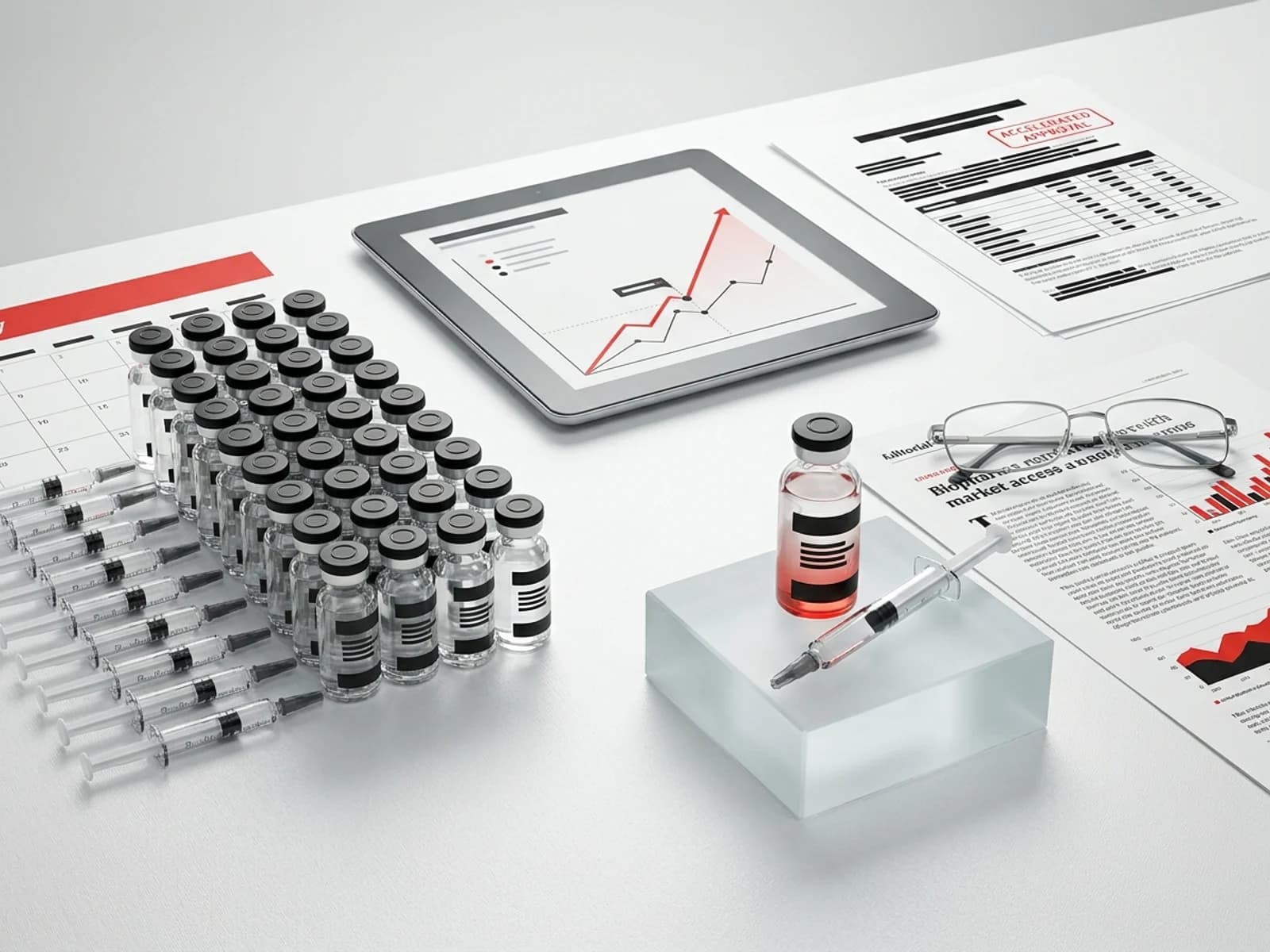
At peak in 2024, compounded semaglutide and tirzepatide reached roughly 30% of US GLP-1 supply, with an estimated 2 million Americans having received compounded versions through telehealth platforms, medical spas, and cash-pay clinics. By mid-2026, that pipeline is closing. The FDA resolved the tirzepatide shortage in December 2024 and the semaglutide shortage in February 2025. Enforcement discretion for 503A pharmacies ended for tirzepatide on February 18, 2025, and for semaglutide on April 28, 2025. For 503B outsourcing facilities, enforcement deadlines were March 19, 2025, for tirzepatide and May 22, 2025, for semaglutide. On April 30, 2026, the FDA proposed permanently excluding semaglutide, tirzepatide, and liraglutide from the 503B bulks list, finding no clinical need for outsourcing facilities to compound these drugs from bulk API.
The regulatory transition is clear. The payer transition is not. Patients moving from compounded GLP-1 to branded products face a coverage gap that most of them do not expect: payers do not recognize compounded semaglutide or tirzepatide as step therapy, prior therapy, or any form of documented treatment history for purposes of prior authorization criteria.
This article is for market access teams, manufacturer hub operators, specialty pharmacy coordinators, and provider-office access staff who need to understand how the compounded-to-branded GLP-1 transition intersects with payer documentation requirements, what payers accept and reject, and how to prevent the regulatory transition from becoming a patient coverage gap.
Regulatory timeline: how we got here
| Date | Event | Significance |
|---|---|---|
| 2022–2024 | Semaglutide and tirzepatide on FDA shortage list | Compounding legally permissible under 503A and 503B |
| October 2, 2024 | FDA removes tirzepatide from shortage list | Compounding authority begins to narrow |
| December 19, 2024 | Tirzepatide shortage resolution confirmed after court remand | 503A enforcement discretion expires February 18, 2025 |
| February 21, 2025 | FDA removes semaglutide from shortage list | 503A enforcement discretion begins phase-out |
| February 18, 2025 | 503A enforcement discretion ends for tirzepatide | State-licensed pharmacies cannot routinely compound tirzepatide copies |
| March 19, 2025 | 503B enforcement discretion ends for tirzepatide | Outsourcing facilities cannot compound tirzepatide from bulk API |
| March 5, 2025 | Court denies preliminary injunction in OFA v. FDA (tirzepatide) | Enforcement deadlines hold |
| April 24, 2025 | Court denies preliminary injunction in OFA v. FDA (semaglutide) | Enforcement deadlines hold for semaglutide |
| April 22, 2025 | 503A enforcement discretion ends for semaglutide | State-licensed pharmacies cannot routinely compound semaglutide copies |
| May 22, 2025 | 503B enforcement discretion ends for semaglutide | Outsourcing facilities cannot compound semaglutide from bulk API |
| February 2026 | FDA issues "FDA Intends to Take Action Against Non-FDA-Approved GLP-1 Drugs" | Enforcement escalation signal |
| April 30, 2026 | FDA proposes excluding semaglutide, tirzepatide, liraglutide from 503B bulks list | Federal Register docket 2026-08552; comment period closes June 30, 2026 |
| By May 2026 | FDA has issued 135+ warning letters to GLP-1 compounders and telehealth companies | Enforcement posture is active |
Why patients used compounded GLP-1 drugs
During the shortage period, compounded semaglutide and tirzepatide filled a real access gap. The drivers were:
Supply unavailability: Branded Wegovy and Zepbound were frequently out of stock at pharmacies. Patients who could not obtain the branded product turned to compounding pharmacies that had inventory.
Cost: Compounded semaglutide and tirzepatide were available for $200–$400 per month through telehealth platforms, compared with list prices of approximately $1,349 per month for Wegovy and $1,086 per month for Zepbound (lower-dose direct-to-consumer pricing). Patients without insurance coverage for GLP-1 obesity drugs — which includes most Medicare beneficiaries before the Bridge demonstration, many Medicaid beneficiaries in states that exclude weight-loss drugs, and commercially insured patients whose employers exclude GLP-1 obesity coverage — found compounded products to be the only affordable option.
Access convenience: Telehealth platforms including Hims, Ro, and LifeMD offered compounded GLP-1 drugs through online questionnaires and virtual visits, often without requiring in-person evaluation, lab work, or ongoing monitoring. This convenience attracted patients who faced long wait times for obesity medicine or endocrinology appointments.
The core payer problem: compounded use is invisible
The fundamental access challenge in the compounded-to-branded transition is that payers cannot see, and generally will not credit, a patient's compounded GLP-1 use history. This creates three specific problems:
Problem 1: Compounded use does not count as step therapy
Most commercial and Medicare Part D plans that cover GLP-1 drugs for obesity require step therapy — the patient must have tried and failed, or have a contraindication to, a lower-cost alternative before the plan will authorize the requested GLP-1. Common step therapy sequences include:
Trial of lifestyle modification alone (3–6 months documented)
Trial of an older weight-loss medication (phentermine, orlistat, Contrave, Qsymia)
Trial of a lower-cost GLP-1 before a higher-cost GLP-1
A patient who used compounded semaglutide for 12 months and responds well to the molecule still needs to complete the plan's step therapy sequence from scratch when requesting branded Wegovy. The compounded use is not recognized as a therapeutic trial.
Problem 2: Compounded use does not establish prior authorization history
Payers evaluate PA requests based on their own authorization history. A patient who was never authorized for branded Wegovy through the plan's PA process has no authorization history. The fact that the patient received semaglutide through a compounding pharmacy — paid for in cash, outside the insurance system — is invisible to the plan's adjudication system.
This means the compounded-to-branded transition is treated as a new-start authorization, with all the documentation requirements that entails: current BMI, diagnosis codes, comorbidity documentation, step therapy completion, and lifestyle-modification attestation.
Problem 3: Dose conversion is not standardized
Compounded semaglutide and tirzepatide products varied widely in concentration, salt form, and dosing during the shortage period. The FDA identified sodium salt forms of semaglutide (semaglutide sodium, semaglutide acetate) in compounded products that are not bioequivalent to the approved products. Some compounded products used non-standard concentrations that do not map cleanly to branded dosing schedules.
For payers that require documentation of prior GLP-1 dose and duration (for step therapy or to determine starting dose), the compounded product history may be unusable. The prescriber cannot reliably document that the patient "was on semaglutide 1 mg weekly" if the compounded product was a sodium salt at an unverified concentration.
How to document the transition for payers
While payers generally do not credit compounded use for step therapy, there are documentation strategies that improve the odds of a successful transition PA:
Strategy 1: Document current clinical status, not compounded history
Focus the PA submission on the patient's current clinical presentation — not their compounded treatment history. The PA should establish:
Current BMI (measured, not patient-reported)
Diagnosis codes for obesity (E66.01) and any qualifying comorbidities
Documentation of lifestyle modification participation
Prescriber's clinical rationale for GLP-1 therapy
The patient's prior compounded use is background information, not a PA qualifying element. Including it prominently in the PA may confuse the reviewer or trigger questions about why the patient was using non-FDA-approved products.
Strategy 2: Use the clinical response as medical-necessity evidence
If the patient responded well to compounded semaglutide or tirzepatide (weight loss, comorbidity improvement), the prescriber can include this clinical response as evidence of medical necessity for the branded product — not as step therapy credit, but as documentation that the patient is likely to benefit from continued GLP-1 therapy.
The language should be careful: "The patient has a history of clinical response to GLP-1 receptor agonist therapy, including weight loss and improvement in [comorbidity]. Based on this response and the clinical evidence supporting long-term GLP-1 therapy for obesity, continued treatment with [branded product] is medically necessary."
Avoid saying "the patient was on compounded semaglutide and it worked, so they should get Wegovy." Instead, frame the response as supporting the therapeutic class, not the compounded product.
Strategy 3: Complete step therapy requirements proactively
If the plan requires step therapy through a specific sequence (lifestyle modification, then older medication, then GLP-1), document completion of each step even if the patient's actual treatment path was different. A patient who went directly to compounded semaglutide without trying phentermine may need to document a contraindication to or inadequate response to the step therapy medication, or complete a trial period.
Some plans allow the prescriber to document why step therapy is not medically appropriate (allergy, contraindication, clinical judgment). This bypass option varies by plan and should be checked before PA submission.
Strategy 4: Leverage manufacturer bridge programs
Both Novo Nordisk and Eli Lilly offer patient assistance and bridge programs that can provide temporary access to branded GLP-1 products while insurance authorization is pending:
Novo Nordisk's NovoCare Pharmacy offers Wegovy injection at $349/month and Wegovy tablets at $299/month for self-pay patients, with additional discounts available for lower doses
Eli Lilly's LillyDirect offers Zepbound lower-cost vials at $299 (2.5 mg), $399 (5 mg), and $449 (7.5 mg, 10 mg, 12.5 mg, 15 mg) per month, and Foundayo (orforglipron) starting at $149/month for 0.8 mg dose
Manufacturer copay cards can reduce costs to as low as $25/month for commercially insured patients with coverage
These programs are not insurance substitutes, but they can prevent a treatment gap during the PA process. Access teams should proactively enroll transitioning patients in manufacturer programs as a safety net.
Special populations
Patients transitioning to the Medicare GLP-1 Bridge
The Medicare GLP-1 Bridge demonstration launches July 1, 2026, and provides GLP-1 access for $50 per month to eligible Part D beneficiaries. CMS has confirmed that the Bridge evaluates eligibility based on BMI and clinical criteria at the time of therapy initiation. A patient who started compounded semaglutide before enrolling in Medicare may be able to attest that they met the Bridge's BMI criteria at the time of therapy initiation — but the Bridge may require documentation from a prescriber, not from a compounding pharmacy.
Bridge eligibility requires BMI ≥ 35 at initiation (or BMI ≥ 30 with qualifying comorbidity). Access teams should help patients compile documented BMI records from the time they initiated GLP-1 therapy, even if that therapy was compounded. The BMI documentation comes from the prescriber's clinical records, not from the compounding pharmacy's dispensing records.
Patients in states that exclude GLP-1 obesity coverage
As of January 2026, KFF reports that only 13 states cover GLP-1 drugs for obesity under Medicaid, down from 16 in 2025. Patients in the remaining states who used compounded GLP-1 during the shortage may have no insurance pathway to branded products. For these patients, manufacturer patient assistance programs and cash-pay options (including LillyDirect's direct-to-consumer pricing for Zepbound) are the primary access routes.
Patients on oral GLP-1 products
The FDA approved oral semaglutide (Wegovy tablets, 25 mg daily) in December 2025 and orforglipron (Foundayo, the first oral small-molecule GLP-1 receptor agonist) in April 2026. These products may offer an alternative pathway for patients who used compounded injectable semaglutide — the oral formulation avoids injection-related barriers, and the daily dosing schedule may align better with some patients' preferences. However, oral GLP-1 products face their own PA requirements and payer management, and compounded-to-oral transitions have the same documentation gap as compounded-to-injectable transitions.
How hub and access teams should manage the transition workflow
Step 1: Identify patients in transition
Hub teams should flag patients who:
Were dispensed compounded semaglutide or tirzepatide within the past 12 months
Are now requesting branded product authorization
May be losing access to their compounded supply as compounding pharmacies wind down
Step 2: Build the PA package for new-start authorization
Do not treat the transition as a continuation. Build a complete new-start PA package:
Current BMI (measured within 30 days)
Diagnosis codes (obesity, comorbidities)
Step therapy documentation or bypass justification
Lifestyle modification attestation
Prescriber's clinical rationale
Step 3: Enroll in manufacturer patient assistance as backup
While the PA is being processed, enroll the patient in the manufacturer's patient assistance or savings program to prevent a treatment gap. These programs are available for commercially insured, uninsured, and (in some cases) Medicare patients.
Step 4: Monitor for PA denial and prepare appeal
Transition PAs may have higher denial rates because the patient lacks a documented step therapy history through the plan. Prepare appeal materials in advance, including:
Clinical response documentation from the prescriber
Weight trajectory data (even if the data comes from self-reported or compounded-treatment records)
Medical-necessity letter from the prescriber citing weight-regain evidence (STEP 1 extension, SURMOUNT-4)
Common failure points
PA submitted with compounded product history as step therapy: Payer rejects because compounded use is not recognized. Solution: submit as a new start with complete documentation.
Dose mismatch at pharmacy: Prescriber writes for branded Wegovy 2.4 mg based on the patient's compounded semaglutide dose history. Payer requires starting at the lowest dose and titrating. Solution: prescribe the standard titration schedule regardless of the patient's prior compounded dose.
Patient abandons therapy during PA processing: The transition from compounded (available immediately for cash) to branded (requires PA, may take weeks) creates a treatment gap. Patients may lose motivation or regain weight during the wait. Solution: use manufacturer bridge programs to maintain access during the PA process.
Compounding pharmacy continues dispensing despite enforcement: Some compounders continue operating in violation of FDA guidance, creating confusion for patients who believe they can stay on compounded products indefinitely. Access teams should inform patients that enforcement is active (135+ warning letters as of May 2026) and that continued compounded use may not be sustainable.
Telehealth platform pivots to non-GLP-1 products: Some telehealth companies that previously offered compounded GLP-1 drugs are now promoting peptide therapies, generic weight-loss medications, or non-FDA-approved alternatives. Patients following these platforms may delay the transition to branded products, worsening the access gap.
What to monitor next
503B bulks list final determination: The FDA's proposal to exclude semaglutide, tirzepatide, and liraglutide from the 503B bulks list is open for public comment through June 29, 2026. The final determination, expected within months, will permanently close the 503B pathway regardless of future market conditions.
Fifth Circuit litigation: The Outsourcing Facilities Association's challenge to FDA's shortage authority is pending before the Fifth Circuit. A ruling in favor of the compounders could reopen compounding pathways, though most observers consider this unlikely given the district court rulings.
Oral GLP-1 access pathways: Oral semaglutide (Wegovy tablets) and orforglipron (Foundayo) may offer simpler payer management for some patients, particularly those who used compounded oral formulations or who prefer to avoid injections.
BALANCE model and Medicare GLP-1 Bridge extension: CMS has extended the Bridge demonstration through December 31, 2027. The long-term coverage model for Medicare GLP-1 access (BALANCE or successor) will determine whether compounded-to-branded transitions will continue to be an issue for Medicare beneficiaries.
State compounding enforcement: State boards of pharmacy are increasingly active in enforcing compounding restrictions. Access teams should track state-level enforcement actions that may affect local supply.
This article provides general information about the regulatory and payer transition from compounded to FDA-approved GLP-1 therapy. It does not constitute medical advice, legal guidance on compounding regulations, or reimbursement guidance for any specific patient or plan. Coverage policies and compounding enforcement vary by plan, state, and product. Always verify current payer criteria and regulatory requirements.
Sources
FDA. "FDA Proposes to Exclude Semaglutide, Tirzepatide, and Liraglutide on 503B Bulks List." April 30, 2026. https://www.fda.gov/news-events/press-announcements/fda-proposes-exclude-semaglutide-tirzepatide-and-liraglutide-503b-bulks-list
FDA. "FDA Clarifies Policies for Compounders as National GLP-1 Supply Begins to Stabilize." Updated April 1, 2026. https://www.fda.gov/drugs/drug-alerts-and-statements/fda-clarifies-policies-compounders-national-glp-1-supply-begins-stabilize
Federal Register. "List of Bulk Drug Substances for Which There Is a Clinical Need Under Section 503B." 91 Fed. Reg. 23431, May 1, 2026. Docket FDA-2026-N-0817.
Orrick. "FDA Moves to Shut the Door on Large-Scale Compounding of GLP-1 Drugs." May 1, 2026. https://www.orrick.com/en/Insights/2026/05/FDA-Moves-to-Shut-the-Door-on-Large-Scale-Compounding-of-GLP1-Drugs
Pharmacy Times. "FDA Moves to Permanently Close the Door on Compounded GLP-1s." May 4, 2026. https://www.pharmacytimes.com/view/fda-moves-to-permanently-close-the-door-on-compounded-glp-1s
Epstein Becker Green. "FDA Proposal Would Leave Semaglutide, Tirzepatide, and Liraglutide Off 503B Bulks List." May 2026. https://www.healthlawadvisor.com/fda-proposal-would-leave-semaglutide-tirzepatide-and-liraglutide-off-503b-bulks-list
KFF. "What to Know About the BALANCE Model for GLP-1s in Medicare and Medicaid." 2026. https://www.kff.org/medicare/what-to-know-about-the-balance-model-for-glp-1s-in-medicare-and-medicaid
PMC. "Affordable Access to GLP-1 Obesity Medications: Strategies to Guide Policymaking." Published 2026. https://pmc.ncbi.nlm.nih.gov/articles/PMC12403326
CMS. "Information for Medicare Beneficiaries: Medicare GLP-1 Bridge." 2026. https://www.cms.gov/medicare/coverage/prescription-drug-coverage/medicare-glp-1-bridge/information-medicare-beneficiaries
On Healthcare. "FDA Closes the 503B Bulks Door on Semaglutide, Tirzepatide, and Liraglutide." May 2026. https://www.onhealthcare.tech/p/fda-closes-the-503b-bulks-door-on
GoodRx. "Switching from a Compounded GLP-1: A Step-by-Step Guide." 2026. https://www.goodrx.com/classes/glp-1-agonists/switching-compounded-brand-glp-1
MedSpa Standards. "GLP-1 Med Spa Compliance 2026: The Complete National Guide." https://medspastandards.com/blog/glp1-med-spa-compliance-2026-complete-guide