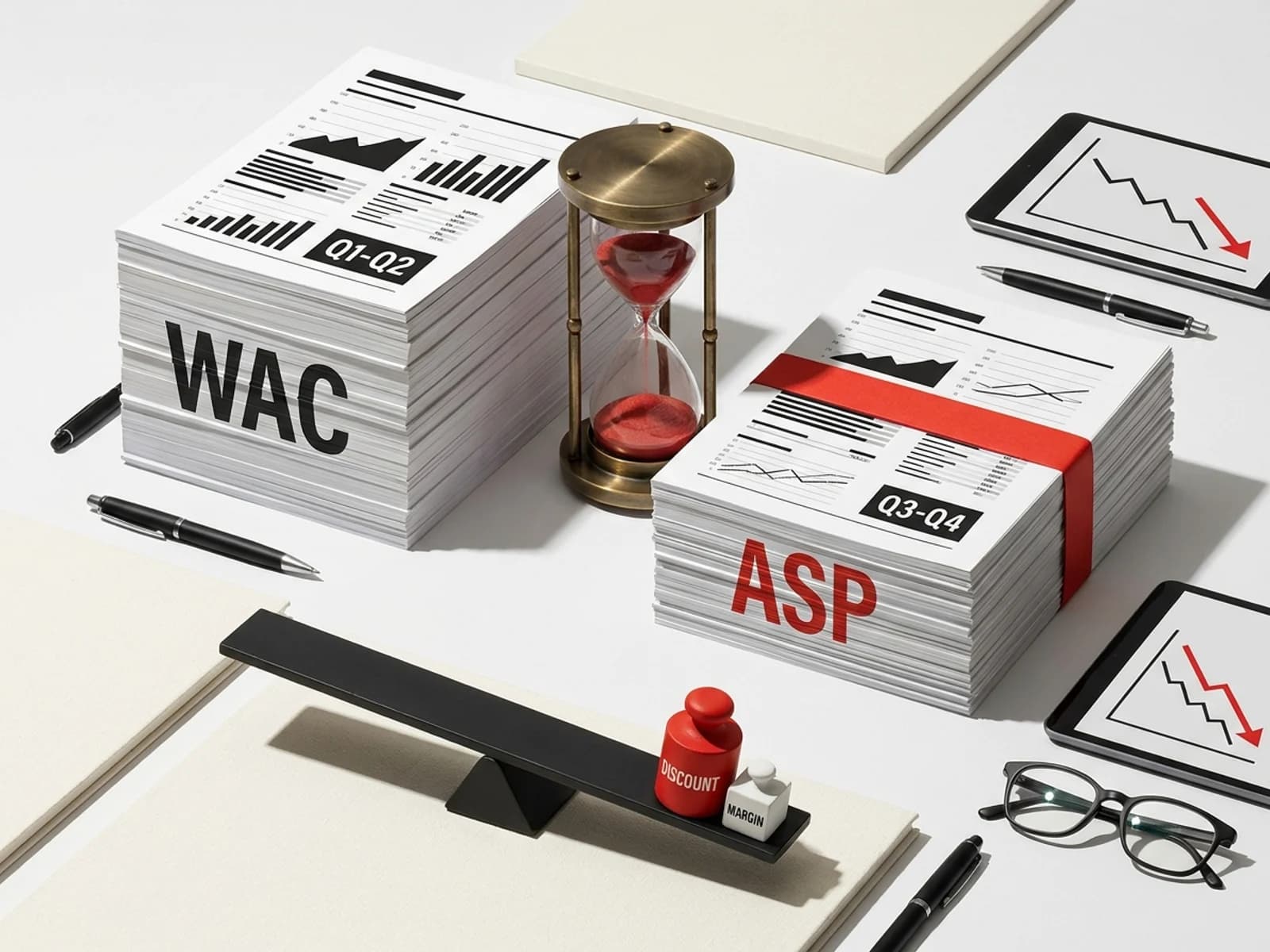
With comments closing on August 31, 2026, the Centers for Medicare & Medicaid Services (CMS) has ignited one of the most consequential reimbursement battles of the decade. In the Calendar Year (CY) 2027 Hospital Outpatient Prospective Payment System (OPPS) and Ambulatory Surgical Center (ASC) Proposed Rule (CMS-1850-P), published in the Federal Register under Document 2026-13656, CMS proposed to slash Medicare Part B reimbursement for 340B-acquired drugs from Average Sales Price (ASP) plus 6 percent down to ASP minus 33.4 percent, effective January 1, 2027.
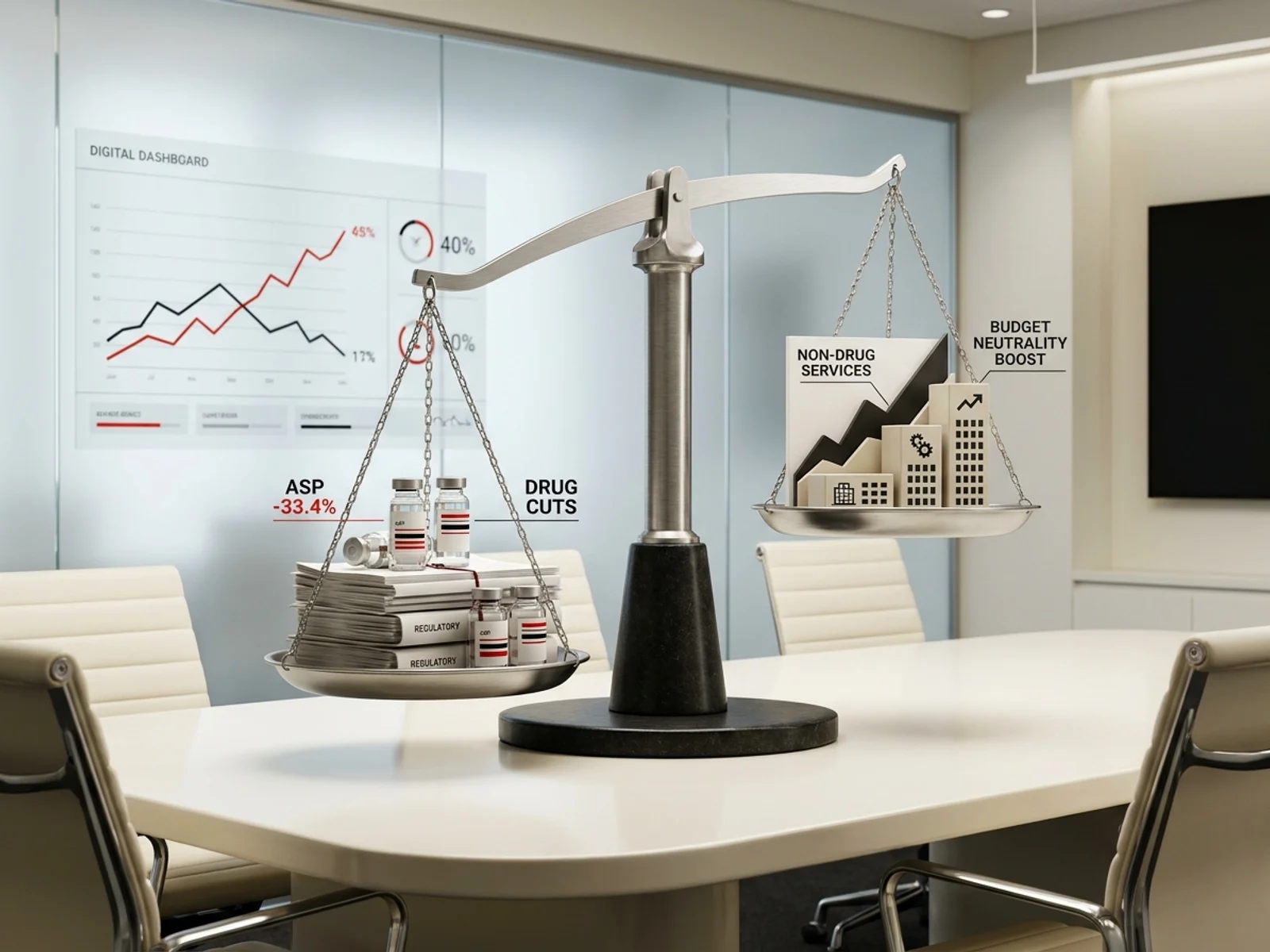
The headline figures in the CMS official fact sheet are staggering: an estimated $4.55 billion reduction in Original Medicare drug payments and an estimated $1.15 billion reduction in Medicare beneficiary cost-sharing in the first year alone—representing a combined $5.7 billion annual drug spending reduction. Under statutory budget-neutrality requirements, CMS proposes to redistribute that $4.55 billion directly into increased OPPS reimbursement for non-drug hospital outpatient services.
However, across health-system executive suites, biopharma market access teams, and oncology billing departments, two critical policy tracks are being dangerously conflated:
Track 1 (The HRSA Ceiling Price & Manufacturer Distribution Track): The ongoing manufacturer rebate-model litigation (e.g., Novartis v. RFK Jr. in the D.C. Circuit), the Health Resources and Services Administration (HRSA) 340B rebate-model pilot, and legislative proposals like the SUSTAIN 340B Act govern how covered entities purchase drugs at or below the statutory ceiling price under Section 340B of the Public Health Service Act (PHSA). That track is already covered in this site's 340B rebate-model ruling article and the 340B/IRA MFP non-duplication workflow.
Track 2 (The CMS Medicare Part B OPPS Reimbursement Track): CMS-1850-P governs how Medicare reimburses hospitals under Section 1833(t)(14) of the Social Security Act when those hospitals administer 340B-acquired drugs to Medicare Part B beneficiaries in the hospital outpatient department.
CMS's proposed cut is not an authorization of manufacturer rebate models, nor does it alter the statutory 340B ceiling price that manufacturers must offer covered entities. Instead, it is CMS's direct response to the Supreme Court's landmark 2022 holding in American Hospital Association v. Becerra. Armed with data from a nationwide hospital acquisition-cost survey conducted between January and April 2026, CMS is attempting to enact the exact differential payment structure the Supreme Court previously invalidated—this time using the statutory survey mechanism the Court demanded.
Below, we analyze the survey mechanics behind ASP minus 33.4 percent, dissect the beneficiary coinsurance anomaly, evaluate the accelerated 3 percent remedy-offset clawback, and map out what hospital CFOs and manufacturer market-access teams must model before the August 31 comment deadline.
The Policy Snapshot: CY 2027 340B OPPS Proposal at a Glance
To evaluate the operational and financial impact of CMS-1850-P, healthcare finance and market-access teams must separate the proposed reimbursement rate from the surrounding budget-neutrality adjustments:
CY 2027 OPPS 340B PROPOSED PAYMENT REFORM (CMS-1850-P)
| Policy Dimension | Proposed Regulatory Term |
|---|---|
| Proposed 340B Reimbursement Rate | ASP minus 33.4% (or WAC minus 33.4% / Part B equiv.) |
| Non-340B Standard Reimbursement | ASP plus 6% (statutory default for SCODs) |
| Net Payment Differential | 39.4 percentage point reduction in Part B drug payment |
| Statutory Authority Invoked | SSA § 1833(t)(14)(A)(iii)(I) (Acquisition Cost Survey) |
| Survey Period & Instrument | Medicare OPPS Drugs Acquisition Cost Survey (ODACS), |
| conducted January 1, 2026 through April 7, 2026 | |
| First-Year Medicare Drug Reduction | $4.55 billion (CMS Fact Sheet official estimate) |
| First-Year Beneficiary Out-of-Pocket | $1.15 billion reduction in 20% Part B coinsurance |
| Total First-Year Drug Reduction | $5.70 billion combined Medicare & beneficiary savings |
| Budget-Neutrality Offset Mechanism | ~$4.55B redistributed to increase non-drug OPPS rates |
| Stakeholder Arithmetic (AHA) | $4.85B drug reduction; ~8.14% conversion factor bump |
| Proposed Remedy Clawback Rate | Accelerated from 0.5% to 3.0% annual conversion factor |
| reduction until $7.8B recouped (estimated CY 2029) | |
| Public Comment Deadline | August 31, 2026 (Docket: CMS-1850-P / FR 2026-13656) |
| Proposed Effective Date | January 1, 2027 |
How AHA v. Becerra Shaped the 2026 Acquisition-Cost Survey
To understand why CMS proposed ASP minus 33.4 percent, one must revisit the legal battle over the Trump administration's 2018 OPPS policy.
In 2018, CMS reduced Part B reimbursement for 340B-acquired specified covered outpatient drugs (SCODs) from ASP plus 6 percent to ASP minus 22.5 percent. The American Hospital Association, America's Essential Hospitals, and the Association of American Medical Colleges sued HHS.
In June 2022, the Supreme Court issued a unanimous 9-0 opinion in American Hospital Association v. Becerra (596 U.S. 724), authored by Justice Brett Kavanaugh. The Court's holding turned on the precise statutory grammar of Section 1833(t)(14)(A)(iii) of the Social Security Act:
                                  SSA § 1833(t)(14)(A)(iii)
                                      PAYMENT OPTIONS
                                             │
                    ┌────────────────────────┴────────────────────────┐
                    │                                                 │
                    ▼                                                 ▼
             OPTION 1 [subclause (I)]                          OPTION 2 [subclause (II)]
             HHS HAS CONDUCTED SURVEY                          HHS HAS NOT CONDUCTED SURVEY
                    │                                                 │
                    ▼                                                 ▼
     May vary reimbursement rates by                   Must pay the statutory default:
     hospital group based on AVERAGE                   AVERAGE SALES PRICE (ASP + 6%)
     ACQUISITION COST data.                            Cannot vary rates by hospital group.
                    │                                                 │
                    ▼                                                 ▼
           [CMS CY 2027 PROPOSAL]                         [STRUCK DOWN IN 2022 IN
         Based on Jan-Apr 2026 ODACS                     AHA v. Becerra: 596 U.S. 724]
Under the statute, if HHS has not conducted an acquisition-cost survey, it must pay the statutory default under subclause (II)—average sales price as calculated under Section 1847A (ASP+6%)—and has no statutory authority to vary rates between 340B and non-340B hospitals. If HHS has conducted a survey, it may set rates under subclause (I) equal to the hospital's average acquisition cost and may vary rates for different hospital groups.
The 2026 ODACS Survey Execution
To cure the statutory defect identified by the Supreme Court, CMS initiated the Medicare OPPS Drugs Acquisition Cost Survey (ODACS), which ran from January 1 through April 7, 2026.
The survey collected net acquisition cost data across hundreds of separately payable HCPCS drug codes from 340B covered entities participating in the OPPS. CMS analyzed the reported net purchasing prices (incorporating statutory 340B ceiling prices and sub-ceiling contract discounts) and concluded:
Across all surveyed 340B-acquired Part B outpatient drugs, hospitals purchased medications at an average discount of 33.4 percent below ASP.
Consequently, CMS set the proposed reimbursement rate under subclause (I) at exactly ASP minus 33.4 percent.
The Coinsurance Anomaly: Why Beneficiaries Were Overpaying
A central evidentiary pillar supporting CMS's proposed cut is what health economists term the 340B Part B coinsurance inversion.
Under standard Medicare Part B rules, beneficiaries are responsible for a statutory 20 percent coinsurance on outpatient services and administered drugs (unless covered by supplemental Medigap insurance). When a hospital bills Medicare for a drug under ASP plus 6 percent, the total allowed charge is 106% of ASP, and the beneficiary's out-of-pocket cost is 20% of that total amount (approximately 21.2% of ASP).
However, because 340B hospitals purchase drugs at significant discounts—frequently 33% to 50% below ASP—the survey revealed instances where the senior's 20% coinsurance payment alone exceeded the hospital's entire acquisition cost for the drug.
THE 20% COINSURANCE ANOMALY: SPECIALTY INFUSION EXAMPLE ($10,000 ASP)
| Financial Metric | Current Policy (ASP + 6%) | Proposed CY 2027 (ASP-33.4%) |
|---|---|---|
| Average Sales Price (ASP) | $10,000.00 | $10,000.00 |
| Total Allowed Part B Reimbursement | $10,600.00 (106% of ASP) | $6,660.00 (66.6% of ASP) |
| Medicare Program Share (80%) | $8,480.00 | $5,328.00 |
| Beneficiary Coinsurance Share (20%) | $2,120.00 | $1,332.00 |
| Hospital 340B Acquisition Cost | $6,660.00 (ASP - 33.4%) | $6,660.00 (ASP - 33.4%) |
| Hospital Margin Over Acquisition | +$3,940.00 (59.2% margin) | $0.00 (0.0% drug margin) |
| Beneficiary Out-of-Pocket Savings | Baseline | -$788.00 (-37.2% reduction) |
By re-anchoring Part B reimbursement to ASP minus 33.4%, the total allowed charge drops from $10,600 to $6,660 for a $10,000 ASP drug. The beneficiary's 20% coinsurance obligation falls from $2,120 to $1,332—yielding an immediate $788 out-of-pocket savings per infusion. Across the entire Medicare Part B book of business, CMS estimates this structural change will save Medicare beneficiaries $1.15 billion in annual cost-sharing.
The $4.55B vs $4.85B Arithmetic: Reallocating Drug Cuts to Non-Drug Services
Under Section 1833(t)(9)(B) of the Social Security Act, annual changes to OPPS payment classifications and reimbursement methodologies must be implemented in a budget-neutral manner.
When CMS cuts $4.55 billion from Part B drug payments, it cannot return that money to the federal Treasury. Instead, the statute mandates that CMS increase the OPPS conversion factor across all non-drug hospital outpatient services (e.g., surgical procedures, clinic visits, imaging, diagnostic tests, and radiation therapy) by an equivalent dollar volume.
                     ┌───────────────────────────────────────────────┐
                     │          340B PART B DRUG CUT                 │
                     │  CMS Fact Sheet: -$4.55B (Medicare Part B)    │
                     │  Beneficiary Share: -$1.15B (20% Coinsurance) │
                     │  Combined Drug Reduction: -$5.70B             │
                     └──────────────────────┬────────────────────────┘
                                            │
                                            ▼
                     ┌───────────────────────────────────────────────┐
                     │      STATUTORY BUDGET-NEUTRALITY OFFSET       │
                     │  ~$4.55 Billion reallocated into OPPS pool    │
                     └──────────────────────┬────────────────────────┘
                                            │
                                            ▼
                     ┌───────────────────────────────────────────────┐
                     │     NON-DRUG OPPS CONVERSION FACTOR BUMP      │
                     │  - Increases payment for surgical & clinic    │
                     │    services across ALL hospitals.             │
                     │  - AHA estimates ~8.14% conversion factor     │
                     │    increase (AHA models $4.85B total cut).    │
                     └───────────────────────────────────────────────┘
Explaining the Discrepancy: CMS Fact Sheet ($4.55B) vs AHA Modeling ($4.85B)
Market analysts will notice a discrepancy between CMS and stakeholder statements:
CMS Official Fact Sheet (CMS-1850-P): Cites an estimated $4.55 billion reduction in Original Medicare drug payments and $1.15 billion in beneficiary drug payments.
American Hospital Association (July 2, 2026 Headline): Cites a $4.85 billion total drug payment reduction and projects an 8.14 percent conversion-factor increase for non-drug hospital outpatient services.
This variance is not something this article splits or averages. $4.55 billion is the CMS fact-sheet figure for Original Medicare drug-payment reduction. $4.85 billion and the 8.14 percent conversion-factor increase are AHA's published arithmetic. Commercial teams should keep the agency baseline and the stakeholder model labeled separately rather than inventing a reconciliation.
The Winners and Losers of Budget-Neutral Redistribution
Because budget-neutrality redistributes drug cuts into non-drug services, the policy produces sharp divergence across provider types:
Community Non-340B Hospitals & Surgical Centers: These facilities do not acquire drugs at 340B discounts and currently bill non-340B Part B drugs at ASP+6%. They will continue receiving ASP+6% for drugs while enjoying an ~8% payment increase across all outpatient surgical and procedural services—making them major net financial winners.
340B-Heavy Academic Medical Centers & Disproportionate Share Hospitals (DSH): Health systems with extensive oncology and specialty infusion volumes rely heavily on 340B drug margins (the spread between 340B acquisition cost and ASP+6% reimbursement) to cross-subsidize uncompensated care, trauma centers, and clinical pharmacy services. The non-drug conversion factor bump will not offset the massive loss in high-margin infused oncology revenue—making them major net financial losers.
The Double Hit: Accelerating the 340B Remedy Clawback to 3%
To compound the financial pressure on hospital systems, CMS-1850-P contains a second major 340B policy: accelerating the 340B remedy offset.
When the Supreme Court invalidated the 2018–2022 340B payment differential in AHA v. Becerra, CMS later issued one-time lump-sum repayments to affected 340B hospitals in early 2024 (November 2023 340B Remedy final rule, 88 FR 77150). Because the original 2018–2022 cuts had been implemented budget-neutrally by increasing non-drug payments, CMS estimated those hospitals had also received about $7.8 billion in excess non-drug payments ($7.769 billion in the proposed-rule arithmetic).
To maintain statutory budget neutrality, CMS established a 16-year recoupment mechanism in the CY 2024 OPPS final rule: reducing the annual non-drug conversion factor by 0.5 percent per year, which would have dragged recoupment out into the 2040s.
In CMS-1850-P, CMS proposes to increase the remedy offset from 0.5% to 3.0% per year, beginning in CY 2027:
340B REMEDY CLAWBACK ACCELERATION TIMELINE COMPARISON
| Clawback Parameter | Existing Policy (CY 2024) | Proposed Policy (CY 2027) |
|---|---|---|
| Annual Non-Drug Rate Reduction | -0.5% per year | -3.0% per year |
| Total Recoupment Target | ~$7.8 billion | ~$7.8 billion |
| Recoupment Completion Target | ~CY 2040 (16-year plan) | CY 2029 (3-year rapid plan) |
| Affected Providers | Enrolled before Jan 2018 | Enrolled before Jan 2018 |
| Exempt Providers | Enrolled post-Jan 1, 2018 | Enrolled post-Jan 1, 2018 |
CMS argues that completing the $7.8 billion recoupment by CY 2029 shortens multi-decade uncertainty. Hospital finance teams should not net AHA's 8.14 percent conversion-factor estimate against the 3 percent remedy offset and treat 5.14 percent as a single "true" non-drug update. Those are separate conversion-factor proposals: one redistributes the 340B drug cut; the other accelerates the 2018–2022 non-drug clawback. Model both.
Exemptions and Operational Scope
Not all hospitals and drug products are subject to the ASP minus 33.4 percent rate under CMS-1850-P. Hospital billing and compliance directors must verify the following carve-outs:
Exempt Hospital Categories:
Rural Sole Community Hospitals (SCHs): Maintained at standard Part B reimbursement (ASP+6%).
Children's Hospitals: Maintained at ASP+6%.
PPS-Exempt Cancer Hospitals: Maintained at ASP+6%.
Exempt Drug Categories:
Vaccines: Billed under separate statutory fee schedules; exempt from 340B OPPS cuts.
Pass-Through Drugs and Biologicals: Products possessing active transitional pass-through payment status under Section 1833(t)(6) (e.g., newly approved biologics with HCPCS C-codes or specific Q-codes during their first 2–3 years) continue to receive ASP+6%.
Billing modifier infrastructure:
For CY 2027, CMS proposes that non-exempt hospitals report modifier JG on 340B-acquired separately payable drugs, that exempt hospitals and certain pass-through lines report informational modifier TB, and that non-340B separately payable drugs report a new modifier XX. That three-way split is a proposed-rule billing design, not a restatement of today's claims edits. See the operational layer in this site's buy-and-bill J-code timing article.
Two Distinct Tracks: Why This Is Not the Rebate-Model Fight
The single most dangerous misconception among commercial biopharma and hospital leadership is that CMS's OPPS proposal is connected to the manufacturer 340B rebate-model litigation.
Healthcare operators must maintain a strict operational firewall between these two arenas:
THE TWO SEPARATE 340B POLICY TRACKS IN AUGUST 2026
| Operational Track | Track 1: HRSA / Manufacturer Rebate-Model Arena | Track 2: CMS / Medicare Part B OPPS Reimbursement Arena |
|---|---|---|
| Governing Statute Federal Oversight Agency Core Regulatory Question | PHSA § 340B (42 U.S.C. 256b) HRSA / HHS Office of Sec. Can manufacturers require covered entities to buy at WAC and claim post-hoc 340B rebates via clearinghouses? | SSA § 1833(t)(14) (42 U.S.C. 1395l CMS (Hospital Outpatient Bureau) How much does Medicare reimburse hospitals when they administer a 340B-acquired drug to a senior? |
| Key Legal Catalyst | • Novartis v. RFK Jr. (D.C. Circuit challenge) • HHS 340B Pilot Proposal • SUSTAIN 340B Act in Senate | • AHA v. Becerra (596 U.S. 724) • 2026 ODACS Hospital Survey • Federal Register Doc 2026-13656 • CMS-1850-P Proposed Rule |
| Effect on 340B Ceiling Px | DIRECT (Alters purchase mechanics & clearinghouses) | ZERO (340B statutory ceiling formula is completely untouched) |
| Action Required by Aug 31 | Track litigation & pilot notices; monitor clearing- house data requirements. | Submit technical comments on survey sample, overhead, and conversion factor redistribution. |
Manufacturers must not adjust their 340B statutory ceiling price calculations, Medicaid rebate submissions, or commercial contract pricing based on CMS-1850-P. The proposed rule alters Medicare Part B provider reimbursement; it does not change the manufacturer's statutory obligation under Section 340B(a)(1) to offer covered outpatient drugs at or below the ceiling price.
Action Items Before the August 31 Comment Deadline
Hospital CFOs, oncology network executives, and biopharma commercial strategy teams must execute four immediate workstreams before comments close on August 31, 2026:
Hospital margin stress-testing: Recompute net operating income under a two-track Part B model: 340B-acquired claims at ASP minus 33.4 percent versus non-340B claims at ASP plus 6 percent, plus the separate 3 percent accelerated remedy offset on non-drug services. Do not assume AHA's 8.14 percent conversion-factor figure makes 340B-heavy infusion programs whole.
Submit technical comments on ODACS methodology: Hospital associations are preparing comments on:
Pharmacy overhead and handling: Whether invoice acquisition cost omits USP <800> handling, compounding, and clinical monitoring.
Sample representativeness: The proposed rule reports that about 29.8 percent of survey-eligible hospitals reported acquisition costs during the study window, and that in the refined population about 53.3 percent of non-340B hospitals and 28.6 percent of 340B hospitals responded with costs. Those are CMS's published response figures. Do not substitute a 41 percent "usable response" number from secondary alerts unless it is pinned to a specific table in the rule.
Manufacturer site-of-care modeling: Biopharma access teams should evaluate whether cutting 340B hospital drug margins would shift infused specialty volume toward non-hospital ambulatory infusion centers or physician-office buy-and-bill—the same site-of-care pressure this site mapped in site-of-care edits for infused drugs.
Prepare for Post-Final Rule Litigation: If CMS finalizes the ASP minus 33.4 percent policy in November 2026, hospital associations will almost certainly file for a preliminary injunction in federal district court before the January 1, 2027 effective date, challenging the survey's statistical sufficiency.
Frequently Asked Questions
When do comments on the CY 2027 OPPS proposed rule close?
Public comments on CMS-1850-P (Federal Register Doc. 2026-13656) must be received by August 31, 2026. The DATES block does not state a 5:00 p.m. cutoff in the text reviewed for this article; use the official docket instructions on Regulations.gov.
Does ASP minus 33.4 percent change the 340B ceiling price charged by manufacturers?
No. The 340B ceiling price is governed by Section 340B of the Public Health Service Act and is calculated by HRSA based on Average Manufacturer Price (AMP) and Unit Rebate Amount (URA). CMS's OPPS rule alters Medicare Part B provider reimbursement under the Social Security Act; it does not modify the price manufacturers charge covered entities.
Are rural Sole Community Hospitals subject to the ASP minus 33.4 percent rate?
No. Rural Sole Community Hospitals (SCHs), children's hospitals, and PPS-exempt cancer hospitals are explicitly carved out in CMS-1850-P and will continue to receive standard Medicare Part B reimbursement at ASP plus 6 percent.
Is this the same policy that the Supreme Court struck down in 2022?
No. In AHA v. Becerra (2022), the Supreme Court invalidated the 2018–2022 ASP minus 22.5% rate because HHS had failed to conduct a statutory hospital acquisition-cost survey under 42 U.S.C. 1395l(t)(14)(A)(iii)(I). For the CY 2027 proposal, CMS conducted the ODACS survey between January and April 2026, attempting to satisfy the exact statutory prerequisite required by the Court.
Sources
Centers for Medicare & Medicaid Services. "Calendar Year (CY) 2027 Hospital Outpatient Prospective Payment System (OPPS) and Ambulatory Surgical Center (ASC) Proposed Rule (CMS-1850-P) Fact Sheet." CMS Newsroom, July 2, 2026. https://www.cms.gov/newsroom/fact-sheets/calendar-year-2027-hospital-outpatient-prospective-payment-system-opps-ambulatory-surgical-center
Centers for Medicare & Medicaid Services. "CMS Acts to Strengthen Care Quality, Cut Drug Costs, and Slash Out-of-Pocket Expenses for Medicare Beneficiaries." CMS Press Release, July 2, 2026. https://www.cms.gov/newsroom/press-releases/cms-acts-strengthen-care-quality-cut-drug-costs-slash-out-pocket-expenses-medicare-beneficiaries
Federal Register / CMS. "Medicare Program; Hospital Outpatient Prospective Payment and Ambulatory Surgical Center Payment Systems (CMS-1850-P)." Proposed Rule, 91 FR Document 2026-13656. https://www.federalregister.gov/d/2026-13656
Supreme Court of the United States. American Hospital Association et al. v. Becerra, Secretary of Health and Human Services, et al. 596 U.S. 724 (2022); Slip Opinion No. 20-1114. https://www.supremecourt.gov/opinions/21pdf/20-1114_09m1.pdf
American Hospital Association. "CMS Proposes Increases to Medicare Hospital Outpatient Department Payment Rates, Site-Neutral and 340B Changes." AHA Special Bulletin & Headline, July 2, 2026. https://www.aha.org/news/headline/2026-07-02-cms-proposes-increases-medicare-hospital-outpatient-department-payment-rates-site-neutral-and-340b
Centers for Medicare & Medicaid Services. "Hospital Outpatient PPS Overview (Comments Due August 31, 2026)." CMS Medicare Payment Systems. https://www.cms.gov/medicare/payment/prospective-payment-systems/hospital-outpatient