The landscape of oncology therapeutics is undergoing a profound shift toward targeted immunotherapies capable of redirecting the patient's immune system to destroy malignant cells. Among these next-generation modalities, bispecific antibodies and T-cell engagers (TCEs) represent one of the most active and highly concentrated clinical development spaces. By binding to a tumor-associated antigen and a trigger molecule on immune effector cells (typically CD3 on T cells), these molecules create a physical bridge that induces localized tumor cytolysis.
To map the global clinical trial activity of this therapeutic class, we performed a comprehensive, reproducible analysis of the ClinicalTrials.gov registry (using a database snapshot of 593,126 registered studies). Our query targeted active and historical clinical trials evaluating bispecific antibodies and T-cell engagers using a unified, tight keyword-matching methodology that combines specific structural descriptors and known international nonproprietary names (INNs).
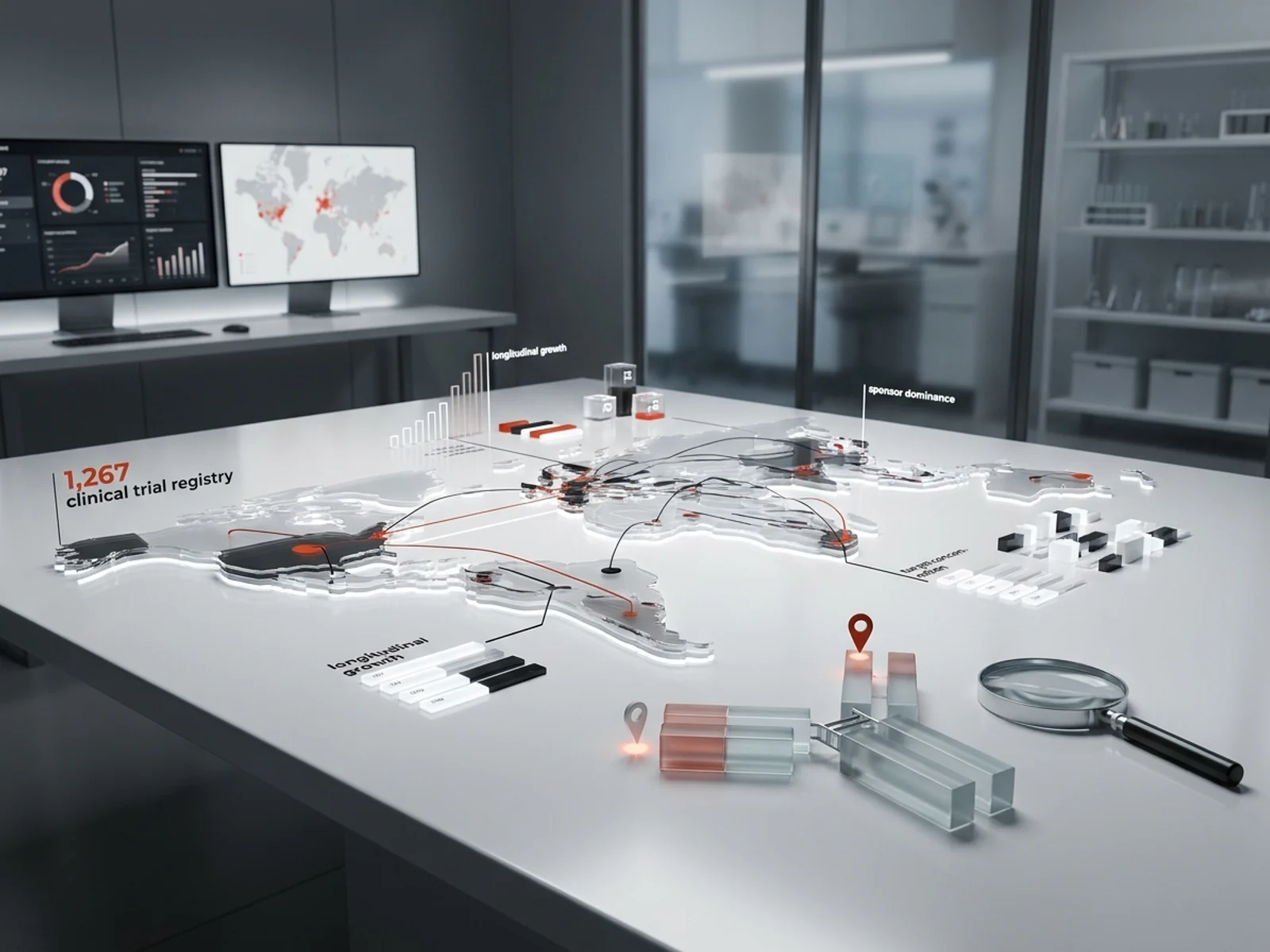
Our analysis identified a cohort of 1,267 bispecific antibody clinical trials globally, alongside a closely related keyword cut of 1,184 trials specifically evaluating T-cell engagers. The two cohorts overlap rather than nest: 1,030 trials appear in both, 154 T-cell-engager trials are captured only by a T-cell-engager INN (they carry no explicit "bispecific" label), and 237 bispecific trials are not T-cell engagers. In the tables that follow, the T-cell-engager column can therefore exceed the bispecific column in individual rows. The data reveals a massive acceleration in clinical trial initiations over the past three years, a heavy concentration of trials within a select group of global biopharmaceutical sponsors, and a clear clinical focus on hematologic malignancies, with multiple myeloma representing the single most crowded indication.
How many bispecific antibody clinical trials are in the ClinicalTrials.gov registry?
Out of the 593,126 registered clinical studies in the national database, our analysis identified 1,267 clinical trials specifically evaluating bispecific antibodies. This represents a broad, keyword-matched upper bound of the global development landscape.
The parallel keyword cut identifies 1,184 trials that evaluate T-cell engagers. Because the two queries use different keyword sets — the bispecific query requires an explicit bispecific descriptor or a known bispecific/TCE INN, while the T-cell-engager query additionally catches any trial that pairs CD3 with engager/redirect wording — the cuts are overlapping bounds, not a parent and child: 1,030 trials appear in both cohorts, 154 T-cell-engager trials are named only by a T-cell-engager INN and fall outside the bispecific set, and 237 bispecific trials are not T-cell engagers. T-cell engagers are immunotherapies specifically designed to engage T cells via CD3 binding, creating a synthetic immunological synapse between effector T cells and target cancer cells. Soluble bispecific antibodies targeting other immune checkpoints (such as PD-1/CTLA-4 or PD-L1/LAG-3) or dual-acting growth factors (like VEGF/Ang-2) make up most of the 237 bispecific-only trials.
Phase Distribution of Bispecific and T-Cell Engager Trials
The clinical development pipeline for bispecific therapies is heavily weighted toward early- and mid-stage clinical studies. The table below details the phase distribution for both the unified bispecific cohort and the specific T-cell engager cut:
| Clinical Phase | Bispecific Trials (Count) | Bispecific Share (%) | T-Cell Engager Cut (Count) | TCE Share (%) |
|---|---|---|---|---|
| Phase 1 | 203 | 16.0% | 192 | 16.2% |
| Phase 1/2 (Combined) | 132 | 10.4% | 122 | 10.3% |
| Phase 2 | 362 | 28.6% | 340 | 28.7% |
| Phase 2/3 (Combined) | 24 | 1.9% | 21 | 1.8% |
| Phase 3 | 101 | 8.0% | 83 | 7.0% |
| Phase 4 | 42 | 3.3% | 30 | 2.5% |
| Early Phase 1 | 9 | 0.7% | 20 | 1.7% |
| Not Applicable (NA) | 394 | 31.1% | 376 | 31.8% |
Note: The high proportion of "Not Applicable" (NA) phases represents a combination of academic investigator-initiated trials, exploratory pilot safety studies, and registry entries from international regions where standard US phase structures are not utilized.
The early-stage heavy distribution—with Phase 1, Phase 1/2, and Phase 2 trials accounting for over 55% of the total registry—indicates a significant development funnel. The industry is currently evaluating hundreds of novel construct designs, dosing schedules, and combination regimens to optimize efficacy and safety profiles. However, this large volume of early-stage trials creates intense competition for specialized clinical trial sites, hematology/oncology investigators, and eligible patient populations.
Clinical Trial Status and Attrition Risks
To evaluate the active development health of the pipeline, we analyzed the recruitment status of both cohorts. The status distribution reveals a highly active but volatile field:
Recruiting: 398 bispecific trials (31.4%) / 362 T-cell engager trials (30.6%)
Completed: 323 bispecific trials (25.5%) / 297 T-cell engager trials (25.1%)
Not Yet Recruiting: 169 bispecific trials (13.3%) / 142 T-cell engager trials (12.0%)
Active, Not Recruiting: 152 bispecific trials (12.0%) / 150 T-cell engager trials (12.7%)
Unknown Status: 111 bispecific trials (8.8%) / 110 T-cell engager trials (9.3%)
Terminated: 56 bispecific trials (4.4%) / 57 T-cell engager trials (4.8%)
Withdrawn: 34 bispecific trials (2.7%) / 42 T-cell engager trials (3.6%)
Other (Suspended/Available): 25 bispecific trials (2.0%) / 20 T-cell engager trials (1.7%)
The combined termination and withdrawal rates (accounting for approximately 7.1% of the bispecific cohort and 8.4% of the T-cell engager cohort) underscore the significant clinical and safety risks associated with these modalities. The primary drivers of trial terminations in this space include:
Cytokine Release Syndrome (CRS) and Immune Effector Cell-Associated Neurotoxicity Syndrome (ICANS): Heavy systemic inflammatory responses driven by uncontrolled T-cell activation can lead to severe, life-threatening toxicities.
Off-Target Toxicities and Cytopenias: Dual targeting can lead to profound and prolonged neutropenia, anemia, and thrombocytopenia, exposing patients to severe infectious risks.
Rapid Standard-of-Care Evolution: The oncology sequencing paradigm is shifting so rapidly that trials initiated three years ago may find their comparator arms obsolete before enrollment is completed.
How fast is the bispecific trial pipeline growing year over year?
The annual rate of new bispecific clinical trial starts demonstrates a sustained oncology gold rush. Between 2018 and 2025, the number of new bispecific trial starts initiated annually surged by more than 300%. The table below tracks the year-over-year starts for both the unified bispecific cohort and the T-cell engager cut:
| Year of Trial Initiation | Bispecific Starts (Count) | YoY Growth (%) | T-Cell Engager Starts (Count) | YoY Growth (%) |
|---|---|---|---|---|
| 2018 | 54 | — | 57 | — |
| 2019 | 57 | +5.6% | 45 | -21.1% |
| 2020 | 60 | +5.3% | 61 | +35.6% |
| 2021 | 81 | +35.0% | 67 | +9.8% |
| 2022 | 98 | +21.0% | 90 | +34.3% |
| 2023 | 109 | +11.2% | 101 | +12.2% |
| 2024 | 167 | +53.2% | 150 | +48.5% |
| 2025 | 218 (Peak Year) | +30.5% | 181 (Peak Year) | +20.7% |
| 2026 (YTD/Partial Year) | 185 | — | 159 | — |
Note: The discrepancy in 2018 where the TCE cut shows 57 starts compared to the 54 of the unified bispecific cohort is a result of keyword classification overlap. Certain trials for T-cell engagers did not contain the explicit word "bispecific" in their primary title or description fields and were captured solely by the TCE INN/CD3 search parameters. This highlight underscores the importance of utilizing a dual-matching keyword taxonomy rather than a single term.
The growth trajectory reveals a clear inflection point in 2024, which saw a 53.2% surge in bispecific trial starts. This surge was catalyzed by the landmark FDA approvals of teclistamab (October 2022), talquetamab (August 2023), and elranatamab (August 2023) for relapsed/refractory multiple myeloma. These approvals validated the clinical viability of off-the-shelf T-cell redirection, prompting a flood of investment into similar constructs.
For the partial year of 2026, the 185 bispecific starts recorded through July indicate that the full-year total is projected to exceed 300 trials. This sustained growth is driven by the expansion of established bispecifics into earlier lines of therapy, the initiation of large-scale combination trials, and the entry of next-generation construct platforms targeting solid tumors.
Which companies run the most bispecific and T-cell-engager trials?
The clinical development of bispecific antibodies is characterized by a dual sponsorship model: commercial biopharmaceutical firms (Industry) fund large-scale registrational programs, while academic institutions and cooperative networks drive exploratory combinations and investigator-initiated trials.
Within the 1,267-trial bispecific cohort, the sponsorship split is:
Academic / Non-Profit / Other: 792 trials (62.5%) — Sponsored by university medical centers, cooperative oncology groups, and regional hospitals.
Industry (Commercial): 393 trials (31.0%) — Sponsored directly by biopharmaceutical manufacturers.
National Institutes of Health (NIH): 31 trials (2.4%) — US federally funded clinical research.
Other Government: 24 trials (1.9%)
Network: 23 trials (1.8%)
Federal (non-NIH): 3 trials (0.2%)
Individual: 1 trial (0.1%)
For the 1,184-trial T-cell engager cut, the sponsorship pattern remains highly consistent: Industry sponsors account for 325 trials (27.5%), while Academic/Other sponsors account for 780 trials (65.9%).
Top Individual Sponsors in the Bispecific Cohort
To map the competitive hierarchy of the field, we ranked the top 12 sponsors in the registry by their total trial counts. The table below compares the unified bispecific cohort and the T-cell engager cut:
| Rank | Sponsor Name | Bispecific Count | T-Cell Engager Count | Sponsor Category |
|---|---|---|---|---|
| 1 | Hoffmann-La Roche | 54 | 31 | Industry |
| 2 | Amgen | 45 | 45 | Industry |
| 3 | Janssen Research & Development, LLC | 29 | 28 | Industry |
| 4 | M.D. Anderson Cancer Center | 28 | 32 | Academic / Other |
| 5 | Institute of Hematology & Blood Diseases, China | 27 | 27 | Academic / Other |
| 6 | Cairo University | 25 | 25 | Academic / Other |
| 7 | National Cancer Institute (NCI) | 24 | 25 | NIH |
| 8 | Pfizer | 22 | 22 | Industry |
| 9 | Genmab | 19 | 18 | Industry |
| 10 | Regeneron Pharmaceuticals | 16 | 15 | Industry |
| 11 | Memorial Sloan Kettering Cancer Center | 14 | 16 | Academic / Other |
| 12 | City of Hope Medical Center | 13 | 22 | Academic / Other |
Commercial Leadership Profiles
Hoffmann-La Roche (54 trials): Roche leads the single-entity list, reflecting its expansive portfolio of approved agents (such as Columvi and Lunsumio for lymphoma, and Vabysmo for ophthalmology) and early-stage bispecific assets. The discrepancy between its bispecific count (54) and TCE count (31) is driven by Vabysmo (faricimab), a VEGF/Ang-2 bispecific that targets ocular vascular pathways rather than T-cell redirection.
Amgen (45 trials): Amgen's clinical program is entirely focused on T-cell redirection (all 45 of its trials are T-cell engagers). As the pioneer of the Bispecific T-cell Engager (BiTE) platform—with Blincyto (blinatumomab) approved in 2014—Amgen maintains one of the deepest pipeline programs, focusing heavily on hematologic indications and emerging solid-tumor targets (such as DLL3).
Janssen Research & Development (29 trials): Janssen's program is highly concentrated in multiple myeloma, built around its approved BCMA-targeting bispecific teclistamab (Tecvayli) and GPRC5D-targeting bispecific talquetamab (Talvey).
Pfizer (22 trials): Pfizer's clinical presence is centered on elranatamab (Elrexfio), a BCMA x CD3 T-cell engager. Pfizer's program is rapidly expanding through combination studies in earlier lines of therapy.
Which cancer indications concentrate bispecific trial activity?
The clinical application of bispecific antibodies and T-cell engagers has been historically concentrated in hematologic malignancies, where tumor-associated antigens are highly lineage-specific and easily accessible in systemic circulation. However, developers are actively attempting to break into solid tumors.
Our analysis of the conditions treated in these trials reveals a major concentration of development activity. The table below ranks the top 12 indications recorded in the registry:
| Rank | Condition listed in Registry | Bispecific Cohort (Count) | T-Cell Engager Cut (Count) | Primary Target Antigens |
|---|---|---|---|---|
| 1 | Multiple Myeloma | 106 | 109 | BCMA, GPRC5D, FcRH5 |
| 2 | Acute Lymphoblastic Leukemia (ALL) | 41 | 44 | CD19, CD22 |
| 3 | Lymphoma | 40 | 55 | CD20, CD19 |
| 4 | Adult (Broad/General) | 24 | 25 | Miscellaneous |
| 5 | Leukemia | 21 | 26 | CD123, CD33 |
| 6 | Not Otherwise Specified (NOS) | 20 | 22 | Miscellaneous |
| 7 | Follicular Lymphoma | 19 | 19 | CD20 |
| 8 | Diffuse Large B-Cell Lymphoma (DLBCL) | 18 | 18 | CD20 |
| 9 | Malocclusion (Database Noise) | 17 | 17 | None (Orthodontic Interventions) |
| 10 | B-cell Acute Lymphoblastic Leukemia | 15 | 15 | CD19, CD22 |
| 11 | Diabetic Macular Edema | 15 | 0 | VEGF/Ang-2 (Faricimab) |
| 12 | Colorectal Cancer | 14 | 13 | CEA, GUCY2C, EGFR |
Critical Database "Gotcha" and Methodological Disclosures
An analysis of this registry data highlights two critical database anomalies that illustrate the limitations of raw keyword extraction in clinical trial registries:
The "Malocclusion" Overlap: The appearance of 17 trials for "Malocclusion" in both cohorts is a classic example of keyword-matching noise. These trials evaluate orthodontic interventions, specifically dual-acting or "bispecific" mechanical appliances (such as functional Herbst appliances or dual-force orthodontic brackets) designed to correct bite alignment. Because these dental studies utilize the term "bispecific" or "dual-action" to describe physical mechanics, they are captured by a broad keyword sweep despite having zero relevance to immunology or oncology.
Diabetic Macular Edema (DME): The 15 trials for DME appear in the unified bispecific cohort but have a count of 0 in the T-cell engager cut. This is scientifically correct: Roche's faricimab (Vabysmo) is a bispecific antibody approved for wet age-related macular degeneration and DME. It inhibits VEGF-A and Angiopoietin-2 to stabilize ocular blood vessels. Because faricimab is a vascular agent and does not bind CD3 or engage immune cells, it correctly drops out of the T-cell engager cohort.
The Multiple Myeloma Crowding Problem
With over 100 dedicated trials in both cohorts, multiple myeloma is the undisputed epicenter of the T-cell engager gold rush. This concentration is driven by the validation of B-cell maturation antigen (BCMA) as a therapeutic target. Approved agents such as teclistamab (Tecvayli) and elranatamab (Elrexfio) have demonstrated remarkable efficacy in heavily pretreated patients.
However, this success has led to extreme pipeline saturation. Patients with relapsed or refractory multiple myeloma are now faced with a crowded sequencing choice between CAR-T cell therapies (such as Carvykti and Abecma) and multiple approved T-cell engagers. For clinical trial developers, enrolling patients into new BCMA-targeted trials is exceptionally difficult. Consequently, the pipeline is shifting toward:
Earlier Lines of Therapy: Moving bispecifics from late-line salvage therapy to first- and second-line settings. A key milestone occurred in March 2026, when the FDA approved teclistamab in combination with Darzalex Faspro (daratumumab and hyaluronidase-fihj) for patients with relapsed or refractory multiple myeloma who have received 1 to 3 prior lines of therapy (based on the MajesTEC-3 trial). This approval moves bispecific therapy significantly earlier in the sequencing paradigm.
Alternative Targets: Developing construct designs against non-BCMA antigens, such as GPRC5D (the target for talquetamab) and Fc receptor-like 5 (FcRH5, targeted by cevostamab).
How many bispecific antibodies are FDA-approved and which targets do they hit?
As of mid-2026, the FDA has approved approximately 15 bispecific antibodies across oncology, hematology, and ophthalmology indications. The table below details the key approved agents, their target mechanisms, and their initial approval dates:
| Trade Name | Generic Name | Developer | Target Antigens | Primary FDA Indications | FDA Approval Date |
|---|---|---|---|---|---|
| Blincyto | Blinatumomab | Amgen | CD19 x CD3 | B-cell precursor ALL | December 2014 |
| Hemlibra | Emicizumab | Roche / Chugai | Factor IXa x X | Hemophilia A | November 2017 |
| Rybrevant | Amivantamab | Janssen | EGFR x MET | Non-small cell lung cancer (NSCLC) | May 2021 |
| Vabysmo | Faricimab | Roche | VEGF-A x Ang-2 | Wet AMD, Diabetic Macular Edema | January 2022 |
| Kimmtrak | Tebentafusp | Immunocore | GP100 x CD3 | Unresectable/metastatic uveal melanoma | January 2022 |
| Lunsumio | Mosunetuzumab | Roche | CD20 x CD3 | Relapsed/refractory Follicular Lymphoma | December 2022 |
| Tecvayli | Teclistamab | Janssen | BCMA x CD3 | Relapsed/refractory Multiple Myeloma | October 2022 |
| Epkinly | Epcoritamab | AbbVie / Genmab | CD20 x CD3 | Relapsed/refractory DLBCL | May 2023 |
| Columvi | Glofitamab | Roche | CD20 x CD3 | Relapsed/refractory DLBCL | June 2023 |
| Talvey | Talquetamab | Janssen | GPRC5D x CD3 | Relapsed/refractory Multiple Myeloma | August 2023 |
| Elrexfio | Elranatamab | Pfizer | BCMA x CD3 | Relapsed/refractory Multiple Myeloma | August 2023 |
| Imdelltra | Tarlatamab | Amgen | DLL3 x CD3 | Small cell lung cancer (SCLC) | May 2024 |
Note: Kimmtrak (tebentafusp) is technically an ImmTAC (Immune mobilizing monoclonal TCR Against Cancer), a fusion protein combining a soluble T-cell receptor (TCR) specific for a GP100 peptide with an anti-CD3 scFv. While structurally distinct from a classic antibody, it functions as a T-cell engager and is clinically grouped within the modality.
The solid-tumor frontier: Imdelltra (tarlatamab)
A critical pipeline milestone occurred in May 2024 with the accelerated approval of Amgen's tarlatamab (Imdelltra) for advanced small cell lung cancer (SCLC). SCLC is an aggressive, poorly differentiated neuroendocrine tumor with historically dismal survival rates and few therapeutic options. Tarlatamab targets delta-like ligand 3 (DLL3), an atypical Notch ligand that is highly expressed on SCLC cells but minimally expressed on healthy tissues, combined with CD3.
The approval of Imdelltra validated the T-cell engager modality in solid tumors, proving that soluble T-cell redirecting constructs can successfully penetrate solid tissues and induce clinical responses without causing prohibitive systemic toxicity. This success has prompted a wave of clinical trial initiations targeting solid-tumor antigens (such as PSMA in prostate cancer, CEA in gastrointestinal cancers, and Claudin 18.2 in gastric cancer).
How does the bispecific pipeline compare to ADCs and CAR-T?
For oncology strategists, biopharma BD leads, and formulary managers, evaluating the relative strength, clinical trials pipeline, and patient access of bispecifics requires a direct head-to-head comparison with competing precision-oncology modalities.
Soluble T-cell engagers occupy a distinct middle ground between Antibody-Drug Conjugates (ADCs) and Chimeric Antigen Receptor T-cell (CAR-T) therapies. The table below provides a comparative framework across key operational, clinical, and database dimensions:
| Modality Dimension | Bispecific / T-Cell Engagers (TCE) | Antibody-Drug Conjugates (ADCs) | CAR-T Cell Therapies |
|---|---|---|---|
| Registry Trial Volume | 1,267 trials | 1,615 trials (July 2026) | ~2,070 trials (July 2026) |
| Primary Mechanism | Redirects endogenous T cells to tumor antigens via CD3 binding | Delivers cytotoxic payloads directly to cells via antibody-antigen internalization | Genetically engineers autologous/allogeneic T cells to express tumor-specific receptors |
| Format / Administration | Off-the-shelf (allogeneic soluble protein); intravenous or subcutaneous infusion | Off-the-shelf (soluble chemical conjugate); intravenous infusion | Patient-specific (requires cell collection, ex vivo manufacturing, lymphodepletion) |
| Clinical Starts Inflection | 2024 (inflection start, teclistamab/talquetamab approval base) | 2023 (inflection start, Enhertu/Padcev expansion base) | 2021 (inflection start, Abecma/Breyanzi approval base) |
| Safety Benchmarks | Cytokine Release Syndrome (CRS), Immune Neurotoxicity (ICANS), Cytopenias | Neutropenia, Interstitial Lung Disease (ILD), Ocular/Neuropathy toxicities | Severe CRS, Severe ICANS, Prolonged Aplastic Anemia, Secondary Malignancies |
| Operational Access | Administered in outpatient clinics; requires step-up dosing and monitoring | Administered in standard oncology infusion suites; low monitoring burden | Requires certified REMS centers; intensive inpatient/ICU monitoring resources |
Pipeline Synergy and Competition
Rather than rendering each other obsolete, these modalities are increasingly coexisting within treatment sequences. However, they compete intensely for patient populations:
TCEs vs. CAR-T in Multiple Myeloma: While CAR-T therapies (such as Carvykti) offer high complete response rates and the potential for a "treatment-free interval," their manufacturing turnaround time (often 4 to 6 weeks) and the logistical requirements of cellular therapy limit their reach. T-cell engagers offer an immediate, off-the-shelf treatment option that can be administered in a community setting, making them the preferred choice for patients with rapidly progressive disease or those living far from academic cellular therapy centers. (To understand how payers evaluate these competing pathways, see our CAR-T cell therapy access landscape and the sibling bispecific antibody access landscape.)
TCEs vs. ADCs in Solid Tumors: ADCs do not require active immune effector cells in the tumor microenvironment to exert their cytotoxic effects, making them highly effective in "cold" tumors that lack active T-cell infiltration. T-cell engagers require a baseline level of T-cell infiltration and function, representing a higher immunologic hurdle in solid tumors. However, TCEs avoid the off-target systemic toxicities associated with chemotherapeutic payload release (such as hair loss, severe nausea, and interstitial lung disease), representing a highly differentiated safety profile.
FAQs
What is the difference between a bispecific antibody and a T-cell engager?
A bispecific antibody is a broad structural classification referring to any engineered antibody or antibody-like construct containing two distinct antigen-binding domains. A T-cell engager (TCE) is a specific functional sub-category of bispecific molecules. TCEs utilize one binding arm to target a tumor-associated antigen and the second binding arm to bind CD3 (or occasionally CD16 or CD2) on T cells, thereby forcing an interaction that activates the T cell to kill the target cancer cell. A bispecific antibody can target other pathways—for example, Roche's faricimab (Vabysmo) targets VEGF and Ang-2 to treat macular degeneration, containing no immune-redirecting mechanism.
Why is multiple myeloma the most common bispecific indication?
Multiple myeloma cells express high, uniform levels of lineage-specific surface antigens, particularly B-cell maturation antigen (BCMA) and GPRC5D, which are rarely expressed on essential normal tissues. This clear therapeutic window makes multiple myeloma highly amenable to targeted redirection therapies. Additionally, myeloma patients are typically older and heavily pretreated, making the off-the-shelf, immediate availability of T-cell engagers highly advantageous compared to the complex manufacturing logistics of autologous CAR-T cell therapies.
How does a registry keyword count compare to the published-literature meta-analysis count?
A registry-based clinical trial query represents a broader, forward-looking indicator of clinical activity, encompassing active, planned, completed, terminated, and unpublished trials globally. In contrast, literature-based meta-analyses are restricted to trials that have completed enrollment and published clinical readouts.
For example, a landmark June 2026 Lancet Oncology meta-analysis pooled clinical safety data from 104 CD3-based T-cell engager trials encompassing 10,353 patients. While the Lancet study provides invaluable clinical safety benchmarks, its trial count (104) is significantly smaller than our registry cohort (1,184 TCE trials). This difference represents the "development lag": hundreds of active or recently initiated trials in the registry have not yet published clinical readouts and are therefore absent from literature meta-analyses.
Which bispecific targets beyond BCMA are emerging in 2026?
As the BCMA and CD20 target spaces become saturated, clinical development is shifting toward next-generation antigens:
GPRC5D: G-protein coupled receptor class C group 5 member D, targeted by the approved bispecific talquetamab. It provides an effective alternative for patients who relapse after BCMA-targeted therapy.
FcRH5: Fc receptor-like 5, highly expressed on myeloma cells. Roche's cevostamab is currently in late-stage clinical evaluation.
DLL3: Delta-like ligand 3, a neuroendocrine target validated by the approval of tarlatamab in small cell lung cancer.
Solid-Tumor Antigens: Target antigens such as prostate-specific membrane antigen (PSMA), carcinoembryonic antigen (CEA), and Claudin 18.2 are the focus of active Phase 1/2 T-cell engager trials, representing the strategic frontier of the modality.
Sources
U.S. National Library of Medicine. ClinicalTrials.gov Registry Database. ClinicalTrials.gov
The ASCO Post. Adverse Events With CD3-Based T-Cell-Engaging Bispecific Antibody Treatment in Cancer: A Systematic Review and Meta-Analysis. (Based on the Lancet Oncology June 2026 publication, pooling 104 trials and 10,353 patients). ASCO Post Coverage
OncoImmunology / PubMed Central. Trial Watch: bispecific T-cell engagers and higher-order multispecific immunotherapeutics (2026). PMC12915878
Binaytara Cancer Network. CAR-T or Bispecific Antibodies First? A Practical Sequencing Guide for Relapsed Multiple Myeloma in 2026. (Contextualizing the March 2026 MajesTEC-3 earlier-line teclistamab approval). Binaytara mm-sequencing-guide
U.S. Food and Drug Administration (FDA). Biologic Approval Records and Novel Biologic Product Logs (Blinatumomab, Teclistamab, Talquetamab, Elranatamab, Tarlatamab approval databases). FDA.gov
Evitria Journal. FDA-Approved Bispecific Antibodies: The Complete List (15 as of May 2026). Evitria Approved List