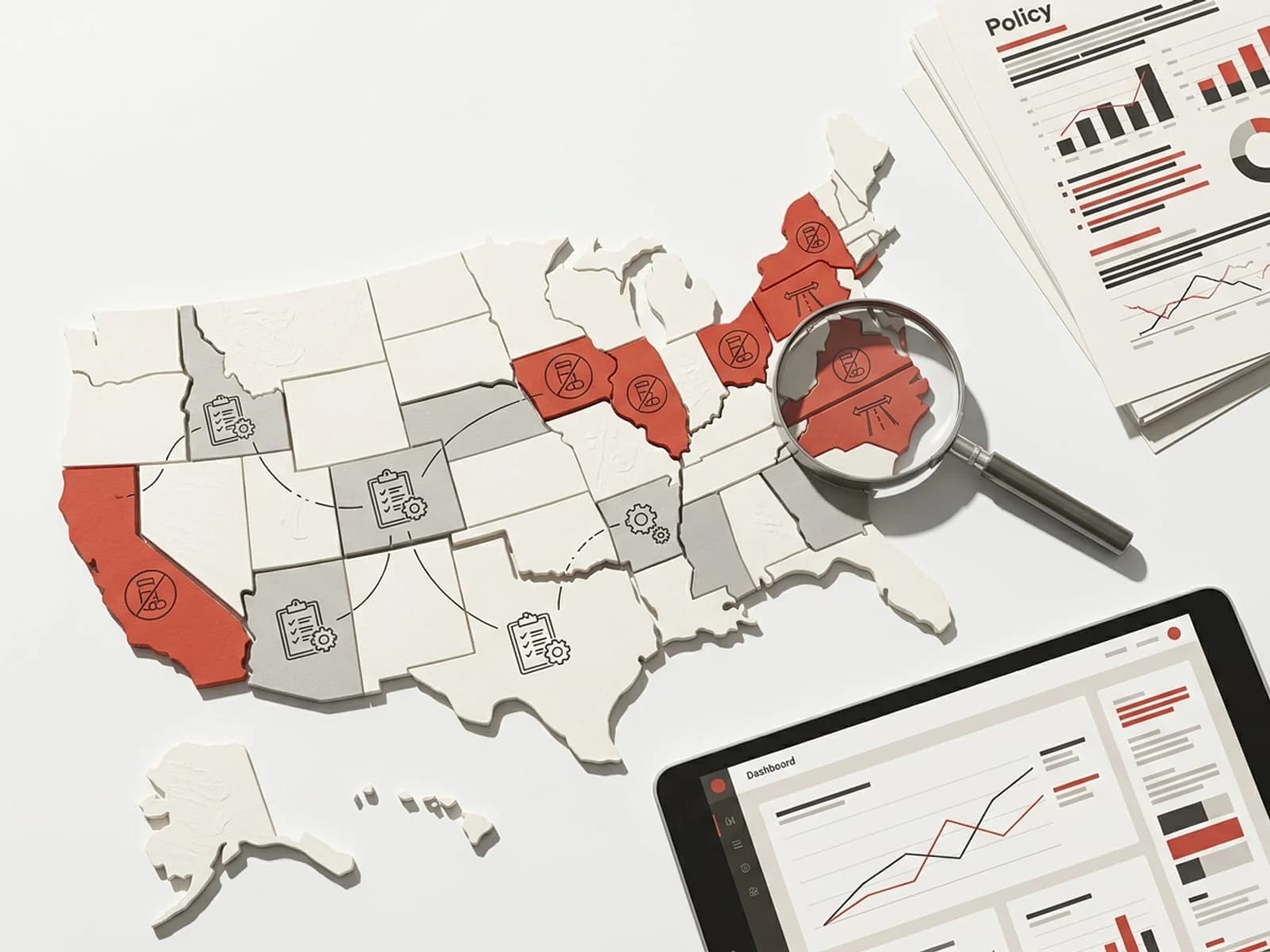
Blue Cross Blue Shield is not a single insurer. It is a federation of 34 independent companies, each setting its own formulary and coverage policies. In 2026, that decentralization has produced a patchwork of GLP-1 coverage decisions: some BCBS affiliates are maintaining weight-loss GLP-1 coverage with prior authorization, while others — including BCBS of Massachusetts, BCBS of Vermont, Harvard Pilgrim Health Care, and BCBS of Michigan — have excluded GLP-1 drugs for obesity treatment on fully insured commercial plans. Employer groups can sometimes buy a rider to restore coverage, but the default for many members is now a hard exclusion that cannot be appealed.
This guide maps the current BCBS GLP-1 coverage landscape across major affiliates, explains prior authorization criteria where coverage exists, and identifies what market access teams, benefit verification specialists, and prescribers should monitor as the trend toward exclusion continues. It is not medical advice or reimbursement guidance for a specific patient or plan.
Quick answer
| BCBS Affiliate | Weight-Loss GLP-1 Coverage (2026) | Key Restriction | Notable Change |
|---|---|---|---|
| BCBS of Massachusetts | Excluded on fully insured commercial plans | Benefit exclusion — cannot be appealed; T2D GLP-1s still covered with PA | Wegovy, Saxenda, Zepbound excluded upon plan renewal starting Jan 2026 |
| BCBS of Vermont | Excluded | Benefit exclusion; T2D and CV GLP-1s still covered with PA | Excluded Jan 1, 2026 |
| BCBS of Michigan | Dropped | Cost-driven exclusion | Cited cost as primary reason for dropping weight-loss GLP-1 coverage |
| Harvard Pilgrim Health Care | Dropped | Following BCBS affiliate exclusions | Dropped weight-loss GLP-1 coverage in 2026 |
| Anthem BCBS (multi-state) | Expanding on some plans | Step therapy; formulary varies by state | Expanding GLP-1 access in 2026 on select commercial plans |
| BCBS of Illinois | Available on select employer plans | 6-month documented lifestyle intervention; step therapy with Contrave before GLP-1 | Employer-dependent coverage |
| BCBS of Texas | Limited; employer-dependent | BMI ≥30; 3-month lifestyle modification documented | Xenical and Contrave on standard formulary |
| Horizon BCBS of NJ | Covered with new PA requirements | PA duration limited to 3 months initially; 6 months for renewal | New GLP-1 for Non-Diabetic Use PA policy effective Jan 1, 2026 |
| CareFirst BCBS | Covered with PA | Plan-dependent criteria | Maintains GLP-1 weight-loss coverage |
| Excellus BCBS (upstate NY) | Changing in 2026 | Exceptions available if criteria met | Coverage modified upon plan renewal |
| BCBS of South Carolina | Varies; tighter utilization management | PA for all GLP-1 indications; prescriber scope restrictions | Restricted coverage for expanded indications (OSA, CV) |
| Blue Shield of California | Restricted | Coverage limited to Class III (morbid) obesity with comprehensive weight program | Tightened authorization requirements |
| Federal Employee Program (FEP) | Covered with PA | BMI and comorbidity criteria; Wegovy for CV indication | Maintains broader anti-obesity medication coverage |
| Independence Blue Cross (Philadelphia) | Excluded for weight loss | Coverage only for T2D and CV indications with PA | Excluded weight-loss GLP-1s effective Jan 2025 |
Who this is for
Market access and payer strategy teams at GLP-1 manufacturers
Benefit verification and prior authorization specialists handling BCBS plans
Employer benefit consultants evaluating GLP-1 coverage across BCBS affiliates
Prescribers who need to anticipate which BCBS plans cover weight-loss GLP-1s
Formulary analysts tracking the exclusion trend across commercial insurers
Source standard
Every fact in this guide is sourced from BCBS affiliate policy documents, provider communications, state regulatory filings, and trade reporting dated 2025–2026. Coverage rules vary by affiliate, plan type, employer election, and state. Always verify current formulary and PA criteria on the specific BCBS plan's member or provider portal.
Why BCBS affiliates are dropping GLP-1 weight-loss coverage
The exclusion trend is driven by cost. GLP-1 drugs for obesity represent the fastest-growing pharmaceutical expenditure for commercial insurers, and BCBS affiliates — particularly smaller ones with fully insured book-of-business concentration — are especially exposed to utilization growth.
BCBS of Massachusetts, the largest affiliate to exclude weight-loss GLP-1s, explained the decision in its provider fact sheet: "The difficult decision to exclude coverage is due to the high cost of these medications. Although they are effective for weight loss, GLP-1s are a driver of rising premiums. If we continue covering GLP-1s for weight loss, our forecasts show these drugs will drive an unsustainable increase in the cost of medical coverage for everyone — whether they take the medication or not."
Key factors behind the exclusion decisions:
Rising utilization: GLP-1 prescriptions have grown 25% year-over-year in commercial plans, driven by expanded FDA indications and consumer awareness
High per-prescription cost: Net cost per GLP-1 prescription remains hundreds of dollars per month even after rebates
Limited long-term data on sustained use: Many patients discontinue GLP-1 therapy within 12 months, raising questions about cost-effectiveness for insurers
Premium impact: Covering weight-loss GLP-1s for all eligible members could increase group premiums by double-digit percentages
No federal mandate: ERISA does not require employer plans to cover anti-obesity medications, and courts have upheld insurer exclusions
On February 19, 2026, the U.S. Court of Appeals for the First Circuit upheld Cigna's right to exclude weight-loss drug coverage without it constituting disability discrimination — a precedent that reinforces the legal standing of GLP-1 exclusions across commercial insurers.
BCBS affiliates that have excluded weight-loss GLP-1s
BCBS of Massachusetts
Effective upon plan renewal starting January 1, 2026:
Wegovy, Saxenda, and Zepbound are excluded from pharmacy benefits
The exclusion applies to all GLP-1 indications except type 2 diabetes
This includes weight loss, sleep apnea, and cardiovascular risk reduction — even for Wegovy's FDA-approved CV indication
Coverage can only be restored if the employer group purchases a rider to continue GLP-1 coverage
The exclusion is a benefit change, not a formulary decision — it cannot be appealed through the standard formulary exception process
Groups with fewer than 100 employees cannot purchase the rider
T2D GLP-1s (Ozempic, Mounjaro, Trulicity, Rybelsus) remain covered with prior authorization and documented T2D diagnosis.
BCBS of Vermont
Effective January 1, 2026:
All GLP-1 drugs FDA-approved for weight loss (Wegovy, Zepbound, Saxenda) are excluded as a benefit
T2D GLP-1s remain covered with PA
Wegovy for cardiovascular risk reduction in adults with established CVD and obesity remains covered with PA
Harvard Pilgrim Health Care
Harvard Pilgrim dropped weight-loss GLP-1 coverage in 2026, following the pattern of its BCBS affiliate network. Coverage for T2D GLP-1s continues.
BCBS of Michigan
BCBS of Michigan cited drug cost as the primary reason for dropping weight-loss GLP-1 coverage. Specific formulary details vary by product line.
Independence Blue Cross (Philadelphia)
IBX excluded GLP-1 and non-GLP-1 drugs prescribed solely for weight loss effective January 1, 2025. Coverage continues for FDA-approved medical conditions including type 2 diabetes and cardiovascular disease with PA.
BCBS affiliates that still cover weight-loss GLP-1s
Horizon BCBS of New Jersey
Horizon implemented a new GLP-1 for Non-Diabetic Use pharmacy PA policy effective January 1, 2026:
Wegovy and Zepbound are covered with PA for weight-loss indication
Prescribers must include medical documentation with PA requests
Initial approval duration is limited to 3 months for obesity and 6 months for other indications
Renewal approvals are for up to 6 months for all indications
Both existing and new PA requests are subject to the new policy
Anthem BCBS (multi-state)
Anthem, the largest BCBS affiliate, is expanding GLP-1 access on some commercial plans in 2026:
Coverage varies by state and plan type
Step therapy is typically required — Saxenda or Contrave trial before Wegovy or Zepbound
Formulary varies across Anthem's multi-state footprint
Some employer groups may have different coverage parameters
BCBS of Illinois
Weight-loss GLP-1s are available on select employer plans
6-month documented lifestyle intervention required
Step therapy with Contrave before GLP-1 approval
Coverage depends on employer election
BCBS of Texas
Limited coverage for GLP-1 weight-loss drugs
Employer-dependent formulary access
BMI ≥30 required; 3-month lifestyle modification must be documented
Xenical and Contrave available on standard formulary as alternatives
Federal Employee Program (FEP Blue)
The Federal Employee Program maintains broader anti-obesity medication coverage:
Weight-loss medications covered when medical-necessity criteria are met
BMI ≥30 (obesity) or BMI ≥27 with weight-related comorbidity
FEP policy effective January 1, 2026, maintains coverage for Wegovy, Zepbound, Saxenda, and Qsymia
Wegovy covered for CV risk reduction in adults with established cardiovascular disease and weight-related comorbidity
Prior authorization required
PA criteria where coverage exists
Where BCBS affiliates cover weight-loss GLP-1s, PA criteria typically include:
BMI documentation: BMI ≥30 (obesity) or BMI ≥27 (overweight) with at least one weight-related comorbidity (hypertension, T2D, dyslipidemia, sleep apnea)
Lifestyle program: Participation in a comprehensive weight management program for 3–6 months prior to therapy, including reduced-calorie diet and increased physical activity
Prior therapy documentation: Some plans require documented trial and failure of older anti-obesity medications (Contrave, Qsymia, orlistat) before GLP-1 approval
Clinical narrative: Prescriber documentation of medical necessity, including diagnosis, duration, and rationale for GLP-1 therapy
Quantity limits: 30-day dispensing limit on GLP-1 medications
For T2D GLP-1s (Ozempic, Mounjaro, Trulicity, Rybelsus), PA criteria include documented T2D diagnosis, prior oral therapy trial, and A1C documentation.
What access teams should monitor
Rider adoption rates: For affiliates that excluded weight-loss GLP-1s but offer employer riders, track how many employer groups elect to restore coverage. Rider pricing will signal whether broader rollback is likely in 2027.
Legislative pressure: Several states have considered or enacted legislation requiring insurers to cover anti-obesity medications. State mandates could override BCBS exclusions in specific markets.
BALANCE Model impact: CMS's BALANCE Model for GLP-1s in Medicaid (launching May 2026) and the Medicare GLP-1 Bridge (July 2026) could shift the coverage calculus. If federal programs expand GLP-1 access, commercial insurers may face political pressure to follow.
Affiliate-by-affiliate monitoring: The BCBS federation means that formulary decisions in one state do not predict decisions in another. Access teams should track each affiliate independently.
Generic liraglutide availability: Generic liraglutide (the active ingredient in Saxenda and Victoza) may shift formulary dynamics as a lower-cost GLP-1 option. BCBS affiliates may adopt generic liraglutide as a step-therapy prerequisite before branded semaglutide or tirzepatide.
Key takeaways
Multiple BCBS affiliates — including Massachusetts, Vermont, Michigan, and Harvard Pilgrim — have excluded weight-loss GLP-1s from fully insured commercial plans in 2026.
The exclusions are benefit-level changes that cannot be appealed through standard formulary exception processes. Employers can sometimes purchase riders to restore coverage.
Affiliates that still cover weight-loss GLP-1s (Horizon NJ, Anthem, FEP) require PA with BMI documentation, lifestyle program participation, and often step therapy.
T2D GLP-1s (Ozempic, Mounjaro, Trulicity, Rybelsus) remain covered across virtually all BCBS affiliates with PA and documented T2D diagnosis.
The exclusion trend is driven by cost, and the First Circuit's February 2026 ruling upholding Cigna's exclusion reinforces the legal standing of GLP-1 coverage exclusions.
The decentralized BCBS structure means coverage must be verified affiliate-by-affiliate and plan-by-plan.
This is independent information and not medical advice, reimbursement guidance, or a recommendation for any specific payer plan.
Sources
Blue Cross Blue Shield of Massachusetts. "GLP-1 Coverage FAQ." 2026. https://www.bluecrossma.org/sites/g/files/csphws1866/files/acquiadam-assets/99-003442450_Account-Broker_GLP-1_FAQs.pdf
Blue Cross Blue Shield of Massachusetts. "GLP-1 medications Provider Fact Sheet." January 2026. https://provider.bluecrossma.com/ProviderHome/wcm/connect/d049671c-11cb-400d-a9d6-6c4fec9026f3/
Blue Cross and Blue Shield of Vermont. "2026 Coverage Changes for GLP-1 Drugs FDA-Approved for Weight Loss." https://www.bluecrossvt.org/documents/glp-1-faqs
Horizon Blue Cross Blue Shield of New Jersey. "New Requirements for GLP-1 Medications for Weight Loss." https://www.horizonblue.com/providers/news/news-legal-notices/new-requirements-glp-1-medications-weight-loss
Blue Shield of California. "Weight Loss Medication Coverage Change Fact Sheet." https://www.blueshieldca.com/content/dam/bsca/en/provider/docs/Weight-Loss-Drug-Exclusion-Fact-Sheet.pdf
Blue Cross Blue Shield of South Carolina. "GLP-1 Utilization Management Reminder." 2025. https://www.southcarolinablues.com/web/public/brands/sc/providers/news-and-events/news-archive/2025-news/reminder-glp1-utilization-management
Federal Employee Program (FEP Blue). "Weight Loss Medications Policy 5.99.027." January 2026. https://www.fepblue.org/-/media/PDFs/Medical-Policies/2026/January/Pharmacy-Policies/Remove-and-Replace/5_99_027-Weight-Loss-Medications.pdf
AAOPM. "What Insurance Plans Cover Weight Loss Medication in 2026?" https://aaopm.com/blog/insurance-cover-weight-loss-medication
Simplefill. "Employers Are Dropping GLP-1 Coverage." 2026. https://simplefill.com/employers-dropping-glp1-coverage
NAIC. "Does Insurance Cover Prescription Weight Loss Injectables?" https://content.naic.org/article/does-insurance-cover-prescription-weight-loss-injectables
CMS. "Medicare GLP-1 Bridge Demonstration and BALANCE Model." https://www.cms.gov/newsroom/fact-sheets/cms-announces-glp-1-bridge-and-balance-model